Published by Rims & Tires
Compiled & checked by the site's publisher from manufacturer, NHTSA & USTMA data · Updated 2026-08-12
Alloy wheels are lighter, better looking, available in every size, and standard on nearly every new vehicle sold. Steel wheels are heavier, plainer, capped at smaller diameters, and cost a fraction as much. That summary makes the choice look obvious, and for a daily driver it mostly is. What it hides is the part that matters when something goes wrong: the two materials fail differently. Steel bends and can often be bent back. Aluminum alloy cracks, and a cracked wheel is finished. That single difference is why steel wheels are still the right answer for a handful of specific jobs.
What each one actually is
A steel wheel is stamped from sheet steel in two parts — a center disc and a rim — which are then welded together. It is a simple, cheap, extremely well-understood process, and it is why steel wheels all look broadly alike and why hubcaps exist.
An alloy wheel is aluminum alloyed with elements such as magnesium and silicon, formed either by casting molten metal into a mold, by flow-forming a cast center with a spun barrel, or by forging a solid billet under enormous pressure. That flexibility in forming is why alloys come in intricate spoke designs and why they span such a huge price range.
"Mag wheel" is a leftover term from genuinely magnesium wheels, which are rare, expensive, and mostly a motorsport item. If someone is selling you consumer "mags," they are almost certainly aluminum alloy.
Weight, and whether it matters
Alloy wheels are lighter, commonly by around 20 to 25 percent against a comparable steel wheel — the sort of difference where a 17-inch steel wheel around 30 pounds is matched by an alloy in the low-to-mid twenties. The gap narrows on large-diameter, wide alloys, which can weigh as much as small steel wheels.
That weight is unsprung and rotating, which is the kind that counts twice. Tire Rack's own comparison lists the practical results: less unsprung weight, improved acceleration and braking response, added rigidity, and better brake cooling. Less unsprung mass lets the suspension follow the road surface more accurately, which improves both grip and ride quality.
Be realistic about the magnitude, though. On a commuter car doing commuter things, a few pounds per corner is a difference you can measure more easily than you can feel. It matters most on performance cars, on large wheels where the penalty compounds, and on vehicles where every bit of brake cooling is being used.
West Georgia Local
Find the right shop near you
Tell us your vehicle and what you need — we'll match you with a vetted West Georgia shop. Free, no obligation.
Strength, and the failure mode nobody mentions
On a strength-to-weight basis, a good alloy wheel is stronger than steel — that is what allows an intricate spoke design to carry a truck. But strength is not the same as toughness, and the useful question is what happens at the moment of a hard pothole strike.
Steel deforms. It bends, sometimes badly, and it usually keeps holding air. A bent steel wheel can often be straightened, in a shop or crudely at the roadside, and a steel wheel is cheap enough that replacing it is not painful.
Aluminum has far less give. It bends up to a point and then cracks, and a crack in a spoke, the center, or the lug area is not repairable — that wheel is scrap. This is why off-roaders and people who drive genuinely rough roads still argue for steel, and it is a legitimate argument rather than nostalgia.
Two footnotes. Forged alloys are much more ductile than cast ones and tend to bend rather than crack, which is part of what you are paying for. And large-diameter low-profile setups take more punishment through the wheel because there is barely any sidewall to absorb the hit — that is a tire choice compounding a wheel choice.
Corrosion, cost and repairability
Steel rusts. It is painted, the paint chips, and rust starts. In practice a rusty steel wheel keeps working for years and the failure point is usually the bead seat, where corrosion causes slow leaks. Aluminum does not rust but it does corrode — white powdery oxidation under a failing clear coat, and pitting at the bead seat that causes exactly the same slow leak.
On cost, steel is decisively cheaper: roughly $50 to $200 per wheel against $100 to $500 for cast aluminum, and industry comparisons commonly put alloys at two to three times the price of an ordinary steel wheel. A set of steel wheels for a winter or work application is one of the few genuinely cheap wheel purchases left.
Repairability cuts the other way from what people expect. Steel is easy to straighten and effectively impossible to make pretty. Alloy is straightenable within limits, refinishable to like-new appearance for $75 to $300 per wheel, and unrepairable once cracked. So the honest framing is: steel is disposable and forgiving, alloy is restorable and unforgiving.
Size, brakes and what will physically fit
Steel wheels are made mostly in smaller diameters — commonly up to about 17 inches for passenger vehicles, with heavier commercial sizes above that. If your vehicle came on 19s or 20s, steel is usually not an option at all.
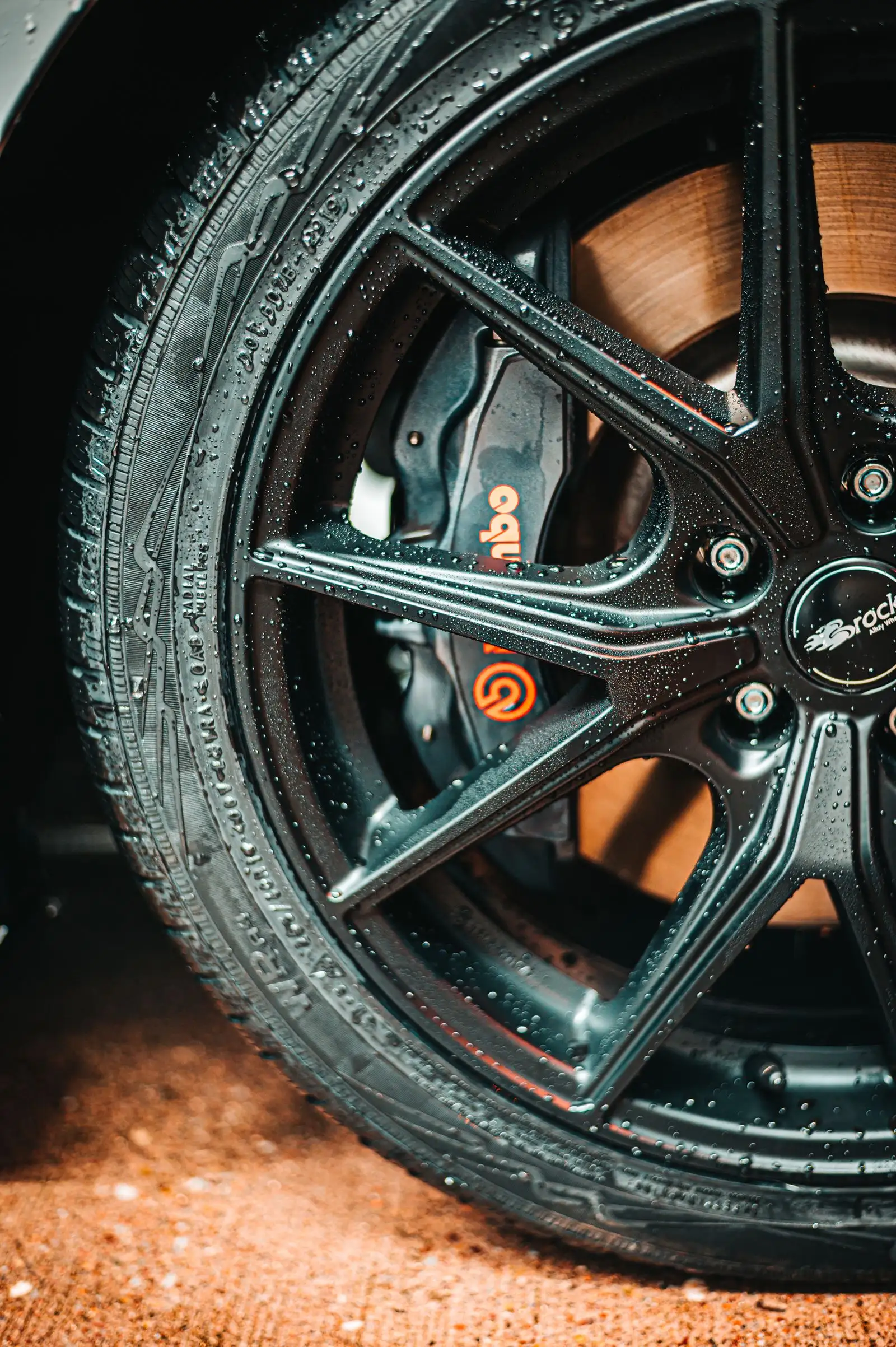
Brake clearance is the other constraint. A steel wheel's stamped center sits differently than an alloy's machined face, and vehicles with large brake calipers frequently will not clear steel wheels even in the right diameter. Better brake clearance is one of the specific advantages Tire Rack cites for alloys.
Practical consequence: for many modern vehicles, especially anything with performance brakes or a factory 18-inch-plus wheel, the alloy-versus-steel debate is settled by what physically fits, not by preference.
So which should you buy?
For a daily driver, alloy. It is what the vehicle was designed around, it is what is available in the right size, it looks right, and the refinishing option means cosmetic damage is fixable rather than final.
For a dedicated second set — winter tires up north, a spare set for a work truck, a trailer, or a beater that lives on gravel — steel. Cheap, tough, bendable rather than breakable, and the fact that it looks plain does not matter for the job it is doing.
For West Georgia specifically, the winter-wheel case that drives most steel sales in colder states barely applies here. What is left locally is work trucks, trailers, budget replacement of a destroyed wheel, and off-road use where field repairability is a real consideration.
One combination to avoid: mixing steel and alloy wheels across an axle. The wheels have different weights and often different offsets, which affects handling and can affect the track width side to side. If you are running a mismatched wheel, it is a get-home solution, not a setup.
RimsAndTires is a free directory for West Georgia drivers. Tell us your vehicle and what the wheels are for, and we will match you with a shop.
Alloy vs steel wheels
| Factor | Alloy (aluminum) | Steel |
|---|---|---|
| Cost per wheel | $100–$500 cast; far more for forged | $50–$200 |
| Weight | Roughly 20–25% lighter than comparable steel | Heaviest option |
| Failure mode | Bends to a point, then cracks; cracks are not repairable | Bends and usually keeps holding air; often straightenable |
| Cosmetic repair | Refinishable to like-new, $75–$300 per wheel | Not realistically refinishable — repaint at best |
| Corrosion | Oxidation under failing clear coat, bead-seat pitting | Rust from chipped paint, bead-seat corrosion |
| Sizes available | Every diameter, every width, every design | Mostly 17in and under for passenger vehicles |
| Brake clearance | Better — machined face clears large calipers | Often will not clear performance brakes |
| Best for | Daily drivers, performance, anything modern | Winter sets, work trucks, trailers, budget replacement |
Frequently asked
Are alloy wheels better than steel wheels?
For most drivers yes — alloys are lighter, available in every size, clear larger brakes, and can be refinished when they get scarred. Steel wins on price, on surviving a hard pothole without cracking, and on being straightenable afterward, which is why it is still the right choice for winter sets, work trucks, and trailers.
How much lighter are alloy wheels than steel?
Commonly around 20 to 25 percent for a comparable size — the sort of gap where a 17-inch steel wheel near 30 pounds is matched by an alloy in the low-to-mid twenties. The advantage narrows on large-diameter, wide alloys, which can weigh as much as smaller steel wheels.
Are steel wheels stronger than alloy wheels?
Not on a strength-to-weight basis, but they are tougher in the way that matters during an impact. Steel deforms and usually keeps sealing; aluminum bends only so far before it cracks, and a cracked wheel is scrap. That is the real argument for steel on rough roads.
Can steel wheels be repaired?
Bends can often be straightened, and steel is forgiving enough that even a crude roadside straightening will usually get you home. What steel cannot do is be made cosmetically like new. Given that steel wheels cost $50 to $200, replacement is frequently the sensible answer anyway.
Why do steel wheels only come in small sizes?
Stamped steel construction does not scale well to large diameters, and the market for big steel wheels on passenger vehicles is tiny. For passenger cars and light trucks the practical ceiling is around 17 inches, so vehicles that came on 18s and up generally have no steel option at all.
Can I mix steel and alloy wheels on the same car?
As a temporary get-home measure, yes. As a setup, no. Steel and alloy wheels differ in weight and usually in offset, which changes track width side to side and affects handling. Keep matched wheels across each axle at minimum, and ideally across all four corners.
Keep reading
Last updated 2026-08-12. General guidance only — confirm specifics with a local shop for your exact vehicle.