By the Rims & Tires Team
Compiled & reviewed by our West Georgia tire & wheel research team · Updated 2026-07-24
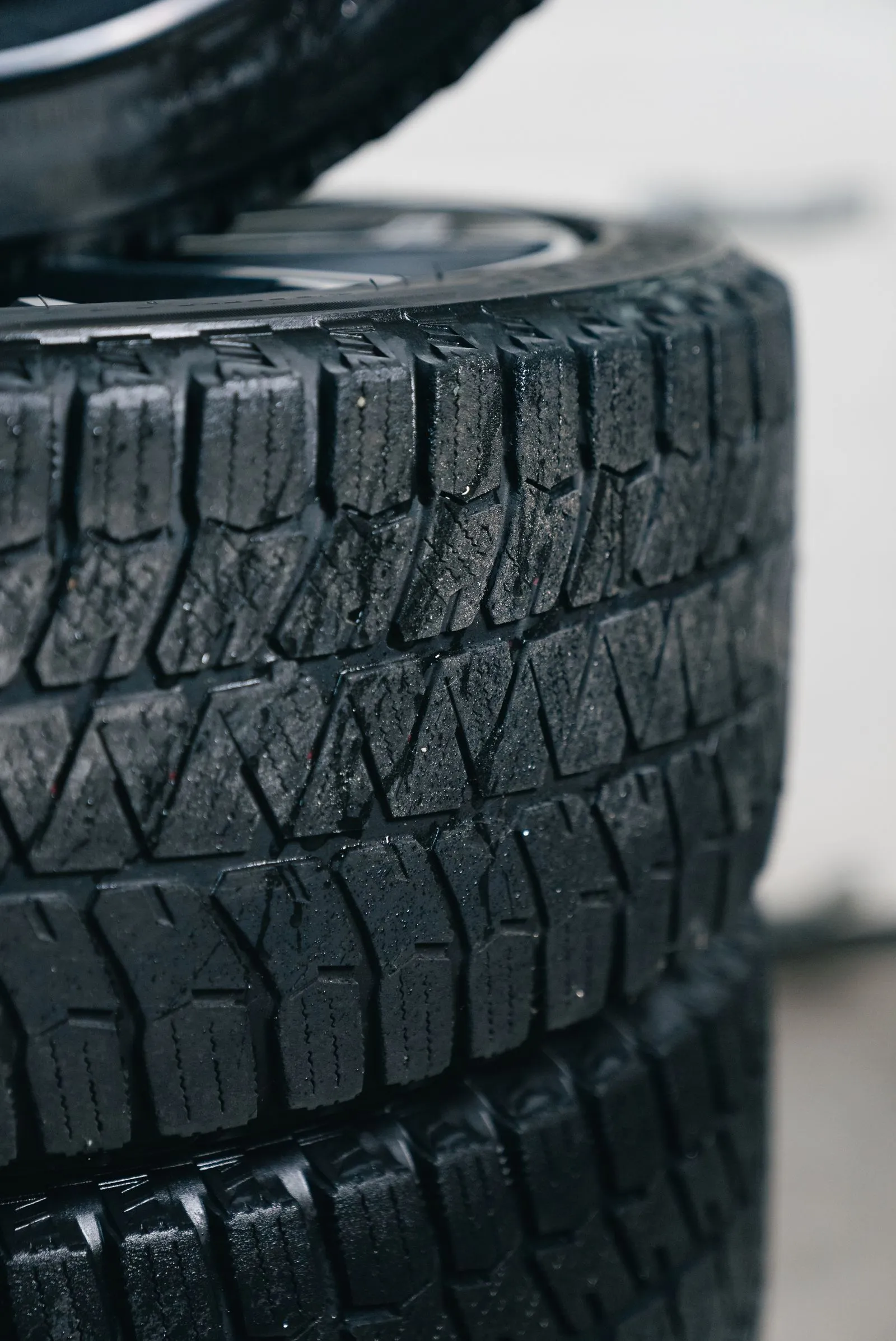
Tire cupping (also called scalloping or feathering) is a specific wear pattern where the tread wears in an irregular, wavy, or dimpled pattern rather than smoothly and evenly. Cupped tires cause vibration at highway speeds and a rumbling noise. They are a symptom of a mechanical problem — not random tire wear.
What causes tire cupping
Worn or failing shock absorbers are the most common cause. Shock absorbers control how the wheel rebounds after hitting a bump. A worn shock allows the wheel to bounce repeatedly — the tire contacts the road hard in spots and misses in others, creating the uneven wear pattern.
Imbalanced tires cause localized wear at the heavy point of the tire. The wheel spins faster at the heavy spot, creating a cup at that location. This is why regular tire balancing prevents cupping.
Bent or damaged wheels that are not perfectly round create repeating contact variation at one point of the rotation.
Overinflated tires ride on the center of the tread instead of the full contact patch, which can create irregular wear in cold or varying conditions.
How to fix cupped tires
Replace the worn shocks first. If the shocks caused the cupping, new tires will cup again without fixing the underlying cause, and worn shocks are the most expensive part of this repair.
Balance all four tires. Wheel balancing eliminates the weight differential that causes localized contact.
Rotate tires regularly. Cupping often develops on unrotated tires because wear accumulates at the same point.
Once cupping is advanced, the tires must be replaced. Cupped tires cannot be fixed by resurfacing — the tread depth is uneven in ways that cannot be corrected.
Frequently asked
Can cupped tires be balanced out?
No. Balancing addresses weight distribution, not tread surface shape. Once the tread is physically cupped, the tire must be replaced. Fix the mechanical cause (shocks, balance) before installing new tires.
How do I know if my tires are cupped?
Run your hand across the tread surface — cupped tires feel wavy or scalloped rather than smooth. You may also notice vibration at highway speeds that worsens with speed, and a low rumbling noise that changes pitch with speed.
Is it safe to keep driving on cupped tires?
For a short while, yes, but it gets worse fast and the handling turns unpredictable. Cupping usually means a worn shock or a balance problem that's still doing damage every mile. Get it looked at soon rather than letting it chew through the rest of the set.
How much should I budget to fix cupped tires?
It depends on the cause. If it's just balance, that's cheap. If a shock or strut is worn out, the parts and labor are the bigger line item, and you may need new tires on top of that once the cupping is advanced. A local shop can diagnose the root cause before you spend on tires that would just cup again.
Will rotating my tires stop cupping?
Regular rotation helps prevent it, since wear doesn't pile up in the same spot. But once a tire is already cupped, rotating won't smooth it back out. Fix the mechanical cause first, then keep up a steady rotation schedule going forward.
Keep reading
Last updated 2026-07-24. General guidance only — confirm specifics with a local shop for your exact vehicle.