By the Rims & Tires Team
Compiled & reviewed by our West Georgia tire & wheel research team · Updated 2026-07-16
Seasonal tire swaps are common for drivers who run dedicated winter tires or who store their summer performance tires during the cold months. How you store tires when they're off the vehicle matters: ozone, UV light, temperature extremes, and improper stacking all degrade rubber faster than driving does. Proper storage can extend a tire set by years. Improper storage can render good tires unsafe before their tread is worn out.
Cleaning Tires Before Storage
Clean tires thoroughly before storage: remove brake dust, road tar, tire dressing residue, and grime. Use a non-petroleum-based tire cleaner and a stiff brush. Rinse with water and allow tires to dry completely before storage. Storing wet tires invites mildew and can accelerate the ozone degradation of the rubber compound.
Do not apply tire dressing (shine products, conditioners) before storage. Many dressings contain petroleum distillates that can actually accelerate rubber cracking over time. Storing tires clean and dry, without dressing, is better for long-term rubber health.
Inspect each tire before storage: look for cracks, bulges, cuts, and embedded objects. Any object in the tread should be removed and the tire inspected for damage before storage. Do not store a tire with a nail in it. The metal in contact with the rubber for months can cause corrosion and damage that's invisible from the outside.
Best Storage Conditions for Tires
Temperature: cool and consistent is ideal. Garages and basements work well. Avoid areas with freeze-thaw cycles (outdoor storage racks) or extreme heat (next to a furnace, in an unventilated attic). Temperature cycling accelerates rubber fatigue over time.
UV and ozone: both are major tire degraders. Keep tires away from windows and direct sunlight. Electric motors, including shop vacuums, air compressors, and furnaces, generate ozone as a byproduct, so don't store tires near these. Ozone attacks the compounds that keep rubber flexible, causing cracking and brittleness.
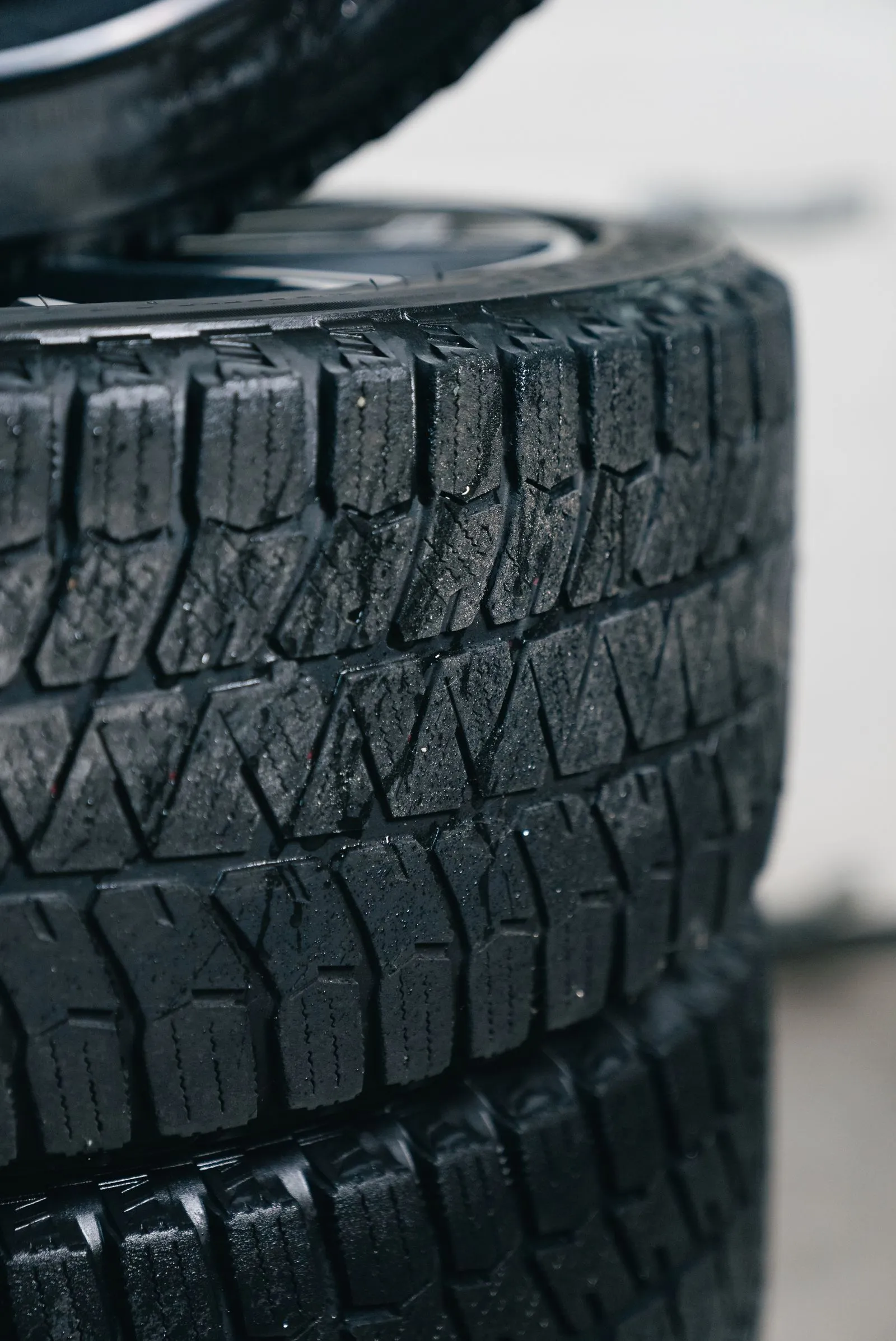
Vertical or horizontal storage: tires without rims should be stored vertically (upright, standing on the tread) and rotated by a quarter turn every month if stored for more than 30 days. Tires stored flat in a stack (horizontal) concentrate the weight and can cause sidewall deformation over long storage periods. Mounted tires (with rims) can be stored in a stack (horizontal) or hung on a tire rack without issue, since the rim distributes the load.
West Georgia Local
Find the right shop near you
Tell us your vehicle and what you need — we'll match you with a vetted West Georgia shop. Free, no obligation.
Plastic Bags and Packaging
Storing tires in large black plastic bags (such as contractor-grade garbage bags), with the air pressed out and the opening sealed, slows ozone exposure significantly. Ozone in the ambient air attacks tire rubber, so reducing air contact during long storage reduces this effect.
This is especially useful for tires stored in spaces where ozone sources (motors, tools) are present. The plastic bag is not airtight (ozone still slowly diffuses through plastic) but it meaningfully reduces exposure compared to open storage.
Avoid bags with ventilation holes or mesh bags — these provide no ozone protection. Standard clear plastic bags offer less UV protection than black bags, though UV is less of a concern in enclosed storage.
Frequently asked
How long can tires be stored before going bad?
Properly stored tires (clean, cool, dark, in plastic bags) can last 5 to 10 years in storage without significant degradation. The 6-year service life recommendation applies to tires in use on a vehicle, which experience UV, heat cycling, and ozone from roads — stored tires age slower. Inspect stored tires before remounting: look for cracking in the sidewalls and tread blocks, any unusual stiffness, or surface discoloration that suggests significant aging.
Should I store tires in garbage bags?
Yes — large black plastic bags reduce ozone exposure during storage, which is one of the primary chemical degraders of rubber compound. Press out as much air as possible before sealing. This is especially valuable if your storage space contains electric motors (compressors, vacuums, furnaces) which produce ozone as a byproduct.
Can I store tires outside?
Outdoor tire storage is not recommended for long-term storage. UV radiation, freeze-thaw temperature cycling, and direct rain exposure all accelerate tire aging. Short-term outdoor storage with a UV-blocking cover is acceptable. For seasonal storage of multiple months, bring tires indoors.
Should I inflate tires to full pressure for storage?
For unmounted tires, inflation is not applicable — unmounted tires hold their shape without air. For mounted tires on rims being stored, reduce inflation to approximately 10 to 15 PSI (just enough to maintain the bead seal) to reduce internal pressure and structural stress during storage. Re-inflate to specification before reinstalling.
Keep reading
Last updated 2026-07-16. General guidance only — confirm specifics with a local shop for your exact vehicle.