By the Rims & Tires Team
Compiled & reviewed by our West Georgia tire & wheel research team · Updated 2026-07-24
Every tire sold in the United States has tread wear indicators built into the tread. They are rubber bars molded perpendicular to the tread direction at 2/32 of an inch above the bottom of the tread grooves. When the tread surface wears down to the level of these indicators, the tire is at legal minimum and needs replacement.
What tread wear indicators are and where to find them
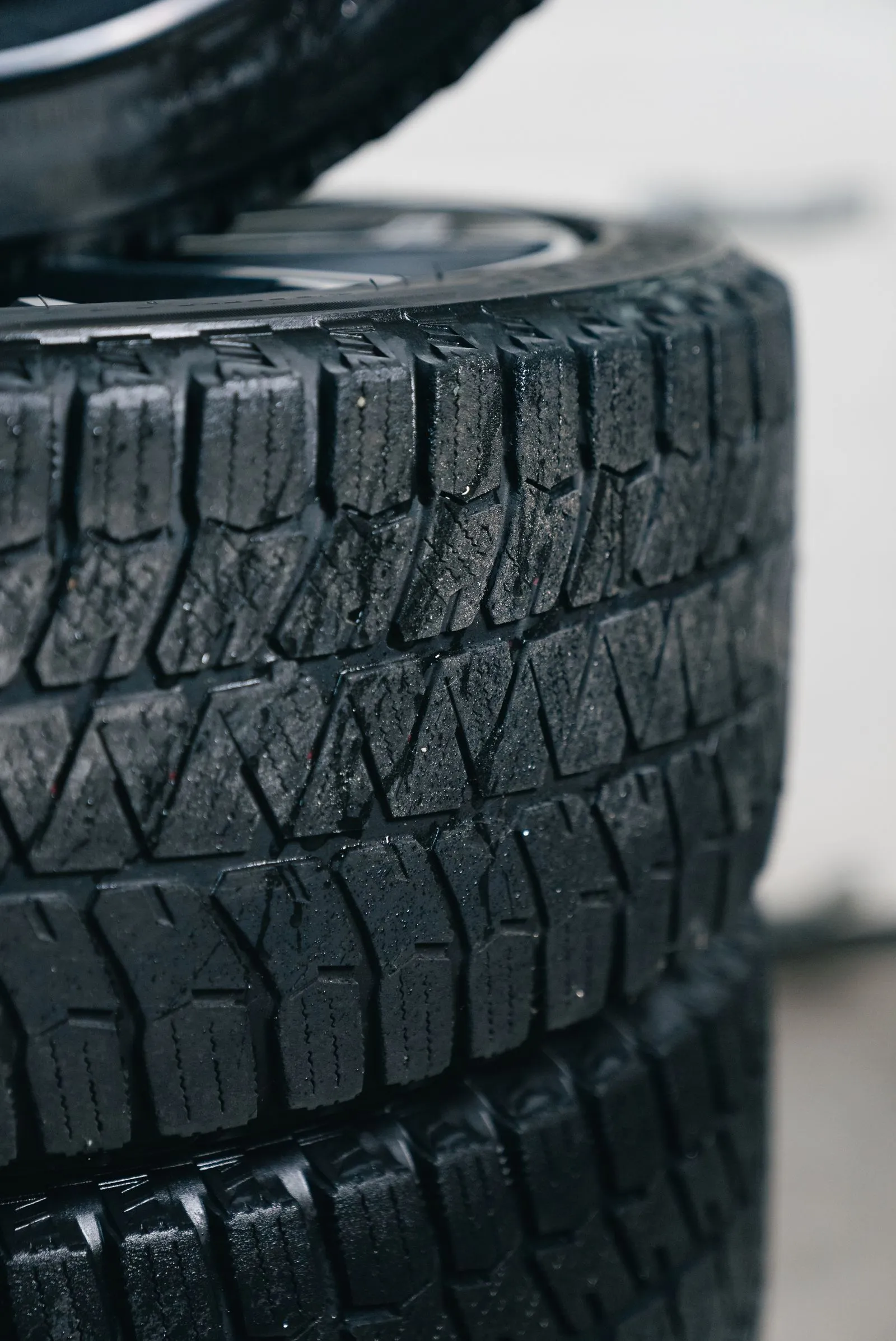
Tread wear indicators (also called tread wear bars) are small rubber bridges that run across the tread grooves at the 2/32 inch level. They are typically located at 6 to 8 locations around the tire.
On the sidewall near the tread: look for a small arrow, TWI marking, or triangle symbol that points to the location of the wear indicator in the nearest tread groove. This tells you where to look.
When new, the indicators are invisible — the tread is well above them. As the tire wears, the tread surface approaches the indicator level. When the tread surface is flush with the wear bar, the tire is at 2/32 inch.
What to do when you see the wear indicators
Replace the tire. At 2/32 inch, the tire is at the legal minimum tread depth in most US states. At this depth, wet traction is significantly degraded — braking distances in rain increase substantially.
Most tire professionals recommend replacement at 4/32 inch — double the wear bar threshold. At 4/32, wet weather performance is noticeably reduced. The last 2/32 of tread provides minimal rain groove clearance.
Use the quarter test for 4/32: insert a quarter head-first into the tread groove. If you can see the top of Washington's head, the tire is at 4/32 or less and nearing replacement.
Frequently asked
Is it illegal to drive on tires at the wear indicators?
In most states, 2/32 inch is the legal minimum — so at the indicator level you are just barely legal. Most states do not proactively test tire tread depth, but a tire failure or accident on tires below 2/32 can create liability. Replace tires at or before the indicator level.
Can I measure tread depth without a gauge?
Yes — use the penny or quarter test. Penny in tread groove, Lincoln head first: if Lincoln's head is fully visible, the tread is at 2/32 or less. Quarter in tread groove, Washington head first: if Washington's head is visible, the tread is at 4/32 or less.
How often should I actually check my tread?
Once a month is plenty, and it takes about a minute with a penny or quarter. Give the tires a closer look before any long highway trip or when the weather turns wet. Catching worn tread early means you replace on your schedule instead of getting stranded on someone else's.
Do the wear bars mean all four tires are done?
Not necessarily. Tires wear at different rates depending on their position, your alignment, and how consistently they've been rotated. Check each tire on its own, and look across the width of each one too, since an alignment problem can wear one edge down long before the rest. A shop can tell you fast whether it's one tire or the whole set.
Where can I get tires replaced near me in West Georgia?
We'll match you with a local shop in the Carrollton and West Georgia area that can check your tread, tell you honestly how much life is left, and get new tires on if you need them. It's free to get matched, and you're dealing with a real local shop rather than a call center.
Keep reading
- When to replace tires
- How long do tires last
- Used tire safety guide
- Tire shops in West Georgia
- EV Tire Wear — Why Electric Vehicles Are Hard on Tires
- Studded Snow Tires: How They Work, Where They Are Legal, and Alternatives
- Low Profile Tires — Pros and Cons for Real-World Driving
- Run-Flat Tires — What They Are and Whether to Keep Them
Last updated 2026-07-24. General guidance only — confirm specifics with a local shop for your exact vehicle.