Published by Rims & Tires
Compiled & checked by the site's publisher from manufacturer, NHTSA & USTMA data · Updated 2026-08-12
Wet weather is where tire differences matter most for safety. On dry pavement, most tires in a category stop about the same. In the rain, the gap between the best and worst tire in the same size is typically 20 to 30 feet at 60 mph, roughly two car lengths. These are the tires built to shine when the road is wet.
What makes a tire perform well in rain
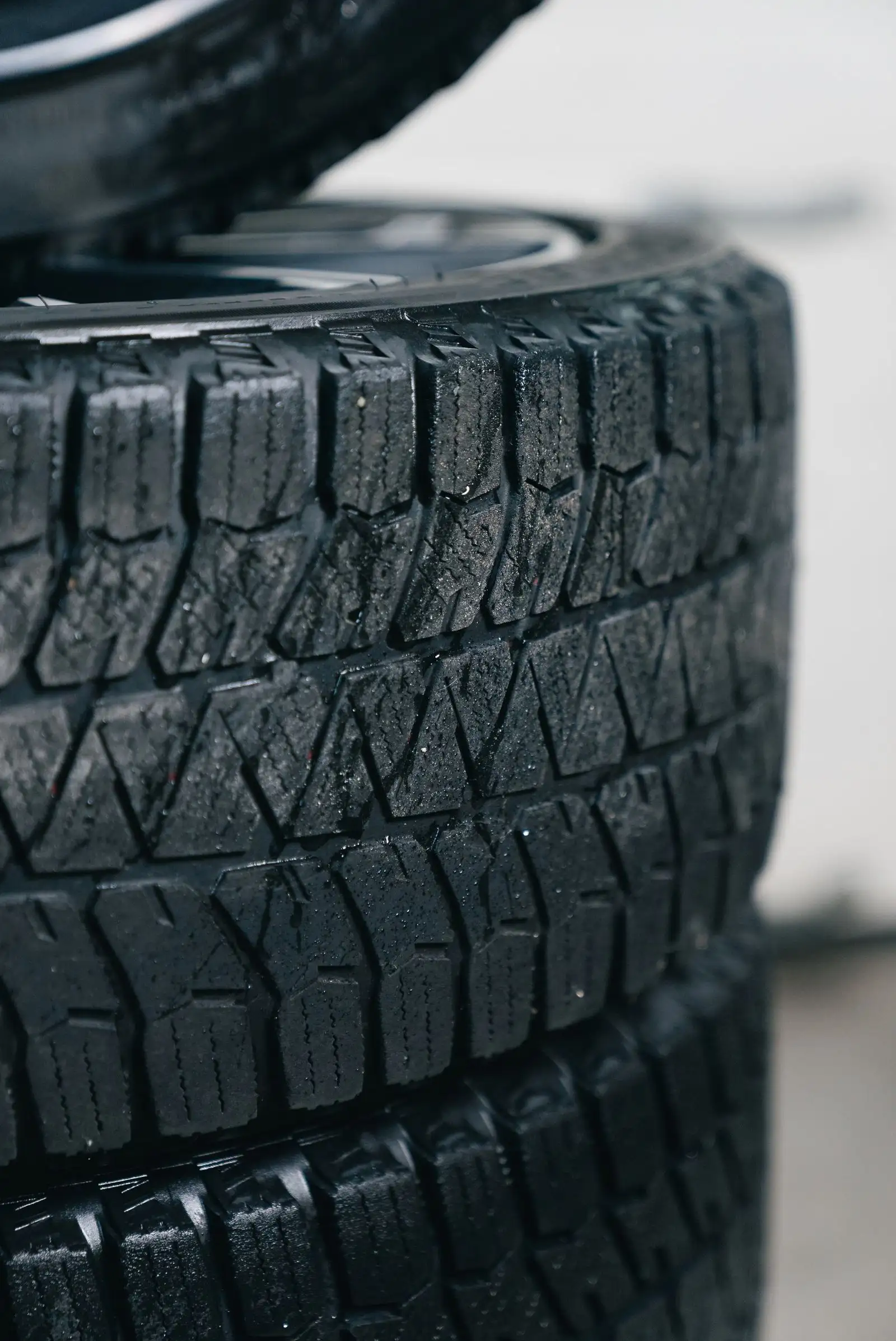
Water evacuation: the grooves channel water out from under the contact patch so the rubber can stay on the road. When they cannot move it fast enough, the tire hydroplanes. It floats on a film of water with almost no steering or braking left.
Compound chemistry: wet grip comes down to the rubber. Silica-rich compounds hold wet pavement far better than plain carbon-black ones, which is why every modern premium all-season uses silica. Budget tires often cut silica to save money, and wet grip is what they give up.
Tread depth: wet braking falls off measurably as a tire wears. The same tire stops noticeably longer in the rain at 4/32 inch than it did new at 10/32 inch. That is exactly why the quarter test flags 4/32 inch as the practical time to replace.
Best wet weather tires — passenger car
Michelin CrossClimate2: the benchmark wet-weather all-season. It consistently posts the top wet-braking scores among all-season tires. Consumer Reports, Tire Rack, and European testers all put it at or near the front of the wet-braking field.
Continental PureContact LS: the quietest tire on this list, and its wet braking is right there with the Michelin. If you want wet-road safety without giving up a quiet ride, this is the pick.
Michelin Defender T+H: the longest-lasting tire here, with wet braking that is excellent even if a step behind the CrossClimate2. The trade for that small wet gap is big mileage, about 80,000 miles versus 60,000 for the CrossClimate2.
West Georgia Local
Find the right shop near you
Tell us your vehicle and what you need — we'll match you with a vetted West Georgia shop. Free, no obligation.
Best wet weather tires — SUV
Michelin CrossClimate2 SUV: the same tire in SUV and crossover sizes, with the same top-tier wet braking across most mid-size and full-size crossovers. It carries the 3PMSF rating for real winter grip on top of the wet performance.
Continental CrossContact LX25: the strongest wet-traction all-season SUV tire outside the CrossClimate2. Excellent hydroplane resistance, very quiet, and available in a wide size range.
Frequently asked
What is the best tire for rain and wet roads?
Michelin CrossClimate2 consistently tops wet braking tests in independent consumer testing. Continental CrossContact LX25 (SUV) and Continental PureContact LS (passenger car) are the runner-up picks with excellent wet performance and lower road noise.
Do all-weather tires perform better in rain than all-season?
In most independent tests, top all-weather tires (CrossClimate2, Pirelli Cinturato All Season SF2) perform as well as or better than standard all-season tires in wet braking. The 3PMSF certification requires genuine cold-weather performance — tires designed for cold typically also have better wet compound chemistry.
Why does wet grip matter so much in West Georgia?
This part of the state gets heavy summer downpours and long stretches of wet pavement, and that first rain after a dry spell lifts oil to the surface and makes roads slick. A tire with strong wet braking is the difference between stopping in time and not. It's the one performance number worth prioritizing here.
How do I know when my tires are losing wet grip?
Wet performance fades as the tread wears, well before the tire is legally bald. If you're feeling the back end step out on wet turns, or the stopping distance in rain feels longer than it used to, the tread is getting shallow. The quarter test is a quick way to check whether it's time.
Are budget tires safe in the rain?
The better budget brands are safe for everyday driving, but wet braking is usually the first thing they trade away to hit a lower price. If most of your miles are wet-weather commuting, spending up a tier for a proven wet performer is money well spent. A shop can point you to the strongest wet option in your size and budget.
Keep reading
Last updated 2026-08-12. General guidance only — confirm specifics with a local shop for your exact vehicle.