Published by Rims & Tires
Compiled & checked by the site's publisher from manufacturer, NHTSA & USTMA data · Updated 2026-08-12
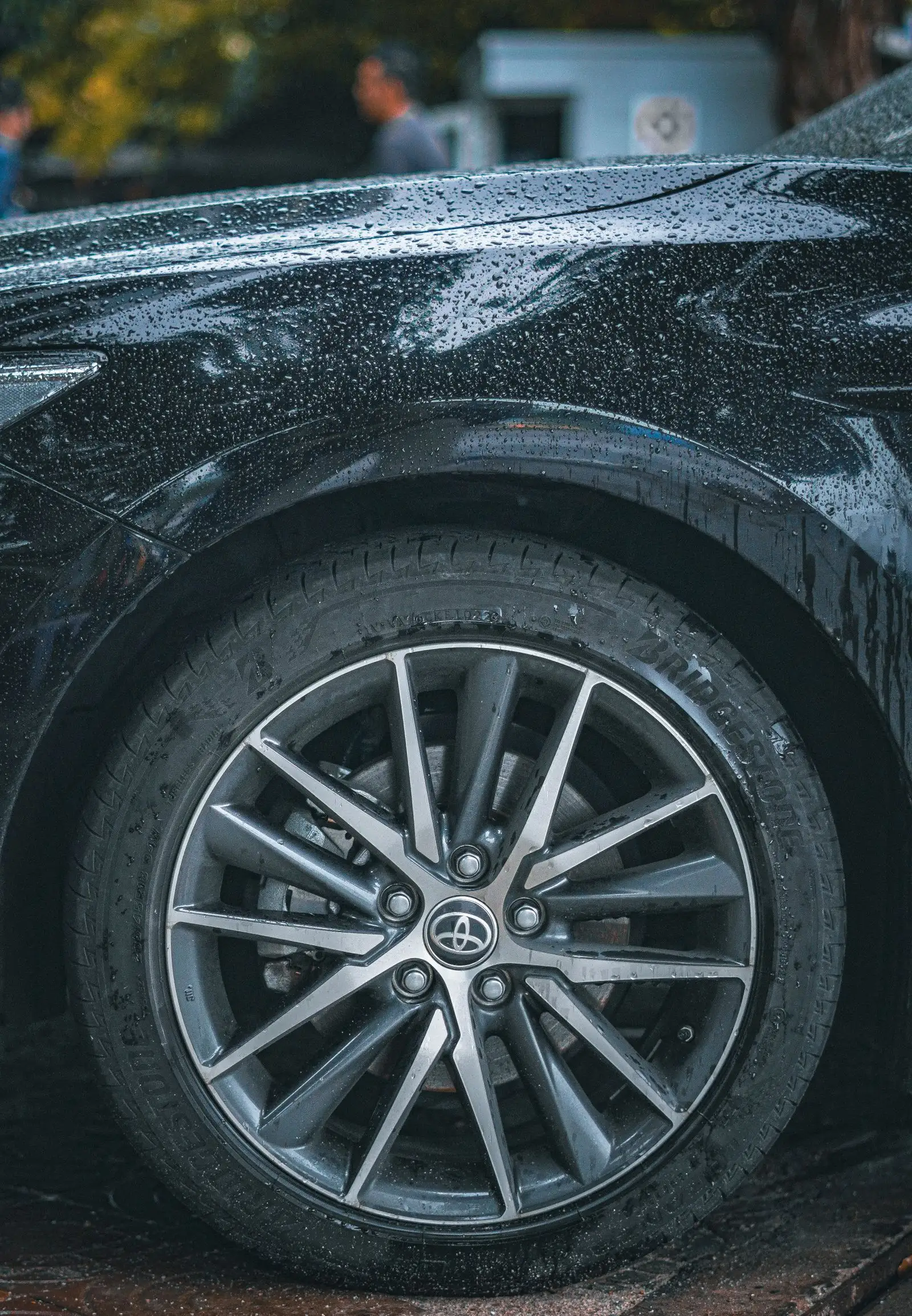
Georgia gets about 50 inches of rain annually — more than Seattle. Wet road performance is not a niche concern here. The difference between a top-rated wet-weather tire and a budget tire in wet conditions is measured in car lengths of stopping distance. Here is what to know.
What makes a tire good in the rain
Tread pattern: rain tires use large circumferential grooves (channels running around the tire) to evacuate water from the contact patch. Wide lateral grooves and siping (fine cuts across the tread blocks) help channel water out and give the rubber more biting edges on wet surfaces.
Rubber compound: high-silica compounds remain more pliable in wet conditions, giving better grip. Budget tires often use lower-cost compounds that harden and lose grip faster in rain.
Tread depth: wet performance degrades significantly with wear. Below 4/32", stopping distances in rain increase by 30–40% on many tires compared to new. Wet grip is the best argument for not running tires to the legal minimum.
Best wet-weather tires — passenger cars
Michelin CrossClimate2: tops wet braking and hydroplaning resistance tests consistently. Its combination of high-silica compound and aggressive channeling makes it one of the best all-season wet performers available.
Continental ExtremeContact DWS06+: DWS stands for Dry/Wet/Snow — it uses visual wear indicators to tell you when each capability diminishes. Excellent wet grip for a max-performance all-season.
Bridgestone Turanza QuietTrack: the quietest option with excellent wet performance — won multiple Consumer Reports ratings for combined ride quality and wet braking.
Pirelli Cinturato P7 All Season Plus II: strong wet grip and fuel efficiency, with consistently high ratings in independent wet braking tests.
West Georgia Local
Find the right shop near you
Tell us your vehicle and what you need — we'll match you with a vetted West Georgia shop. Free, no obligation.
Best wet-weather tires — trucks and SUVs
Continental TerrainContact H/T: excellent wet performance for trucks and SUVs with highway-focused driving. It's consistently strong in wet-braking tests for the truck category.
Michelin Defender LTX M/S: long tread life combined with strong wet grip. The Michelin wet-weather compound keeps performing even as the tread wears down.
Falken Wildpeak AT3W: for trucks that also need some off-road capability, the Wildpeak AT3W handles wet roads better than most all-terrain tires. Its 3PMSF rating reflects genuine wet and snow capability.
What to avoid in wet conditions
Budget tires from unknown brands: independent wet-braking tests consistently show budget tires needing 20 to 30 more feet to stop at 60 mph than top-rated tires in the same size. On a highway in Georgia rain, this is the difference between a near-miss and a collision.
Worn tires: no new tire purchase is more impactful for wet weather safety than replacing tires at or below 4/32". The wet-weather traction loss below that depth is dramatic.
Asymmetric tires mounted incorrectly: asymmetric tires (marked IN/OUT on the sidewall) have specific inside and outside faces. A backwards-mounted asymmetric tire loses most of its wet weather channeling.
Best Tires for Rain — Wet Weather Tire Guide at a glance
| Trim | Tire | Best For |
|---|---|---|
| wet-weather tires — passenger cars | Michelin CrossClimate2 | tops wet braking and hydroplaning resistance tests consistently. Its combination of high-silica compound and aggressive channeling makes it one of the best all-season wet performers available. |
| wet-weather tires — passenger cars | Continental ExtremeContact DWS06+ | DWS stands for Dry/Wet/Snow — it uses visual wear indicators to tell you when each capability diminishes. Excellent wet grip for a max-performance all-season. |
| wet-weather tires — passenger cars | Bridgestone Turanza QuietTrack | the quietest option with excellent wet performance — won multiple Consumer Reports ratings for combined ride quality and wet braking. |
| wet-weather tires — passenger cars | Pirelli Cinturato P7 All Season Plus II | strong wet grip and fuel efficiency, with consistently high ratings in independent wet braking tests. |
| wet-weather tires — trucks and SUVs | Continental TerrainContact H/T | excellent wet performance for trucks and SUVs with highway-focused driving. It's consistently strong in wet-braking tests for the truck category. |
| wet-weather tires — trucks and SUVs | Michelin Defender LTX M/S | long tread life combined with strong wet grip. The Michelin wet-weather compound keeps performing even as the tread wears down. |
| wet-weather tires — trucks and SUVs | Falken Wildpeak AT3W | for trucks that also need some off-road capability, the Wildpeak AT3W handles wet roads better than most all-terrain tires. Its 3PMSF rating reflects genuine wet and snow capability. |
Frequently asked
Does tread depth matter more than tire brand for wet traction?
Both matter — but tread depth has a larger effect. A top-tier tire at 4/32" underperforms a budget tire at 9/32" in many wet stopping tests. Replace worn tires before focusing on which brand to buy. When buying new tires, brand and compound quality determine which of the new options you choose.
What does hydroplaning mean?
Hydroplaning occurs when a tire rides on a film of water instead of making contact with the road surface. It happens when water flow through the tread channels exceeds the tire's evacuation capacity — typically at highway speeds in heavy rain. The tire momentarily loses all grip. Tires with wider circumferential grooves and adequate tread depth resist hydroplaning longer.
Are summer tires better in the rain than all-season tires?
Premium summer tires from top brands (Michelin Pilot Sport 4S, Continental ExtremeContact Sport) are better in warm rain than all-season tires. But the comparison is compound and brand specific — a top-tier all-season outperforms a budget summer tire in wet conditions.
Do new tires need a break-in period in wet conditions?
New tires have a mold release compound on the surface that can slightly reduce grip for the first 200–500 miles. Some drivers notice that wet grip improves slightly after this break-in period. It is a minor effect — do not drive aggressively on brand new tires until the initial film wears off.
Keep reading
Last updated 2026-08-12. General guidance only — confirm specifics with a local shop for your exact vehicle.