Published by Rims & Tires
Compiled & checked by the site's publisher from manufacturer, NHTSA & USTMA data · Updated 2026-07-24
Most tire failures are preventable. A tire that blows out or loses grip at the wrong moment almost always showed warning signs first. The driver just missed them, ignored them, or did not know what to look for. Here are the seven most reliable signs it is time for new tires.
Sign 1: Tread depth at or below 2/32 inch
The legal minimum tread depth in most states is 2/32 inch. That low, the tire can barely push water out from under the contact patch, so wet grip and hydroplaning resistance fall off a cliff. For West Georgia rain, most tire pros say replace at 4/32 inch or sooner.
The penny test: slide a penny into the tread groove with Lincoln's head down. If you can see the top of his head, you are at or below 2/32 inch and the tire needs to come off now. The quarter test uses the same trick with a quarter. If Washington's head is fully visible, you are down to 4/32 inch, so start planning the replacement.
Sign 2: Tread wear indicators are visible
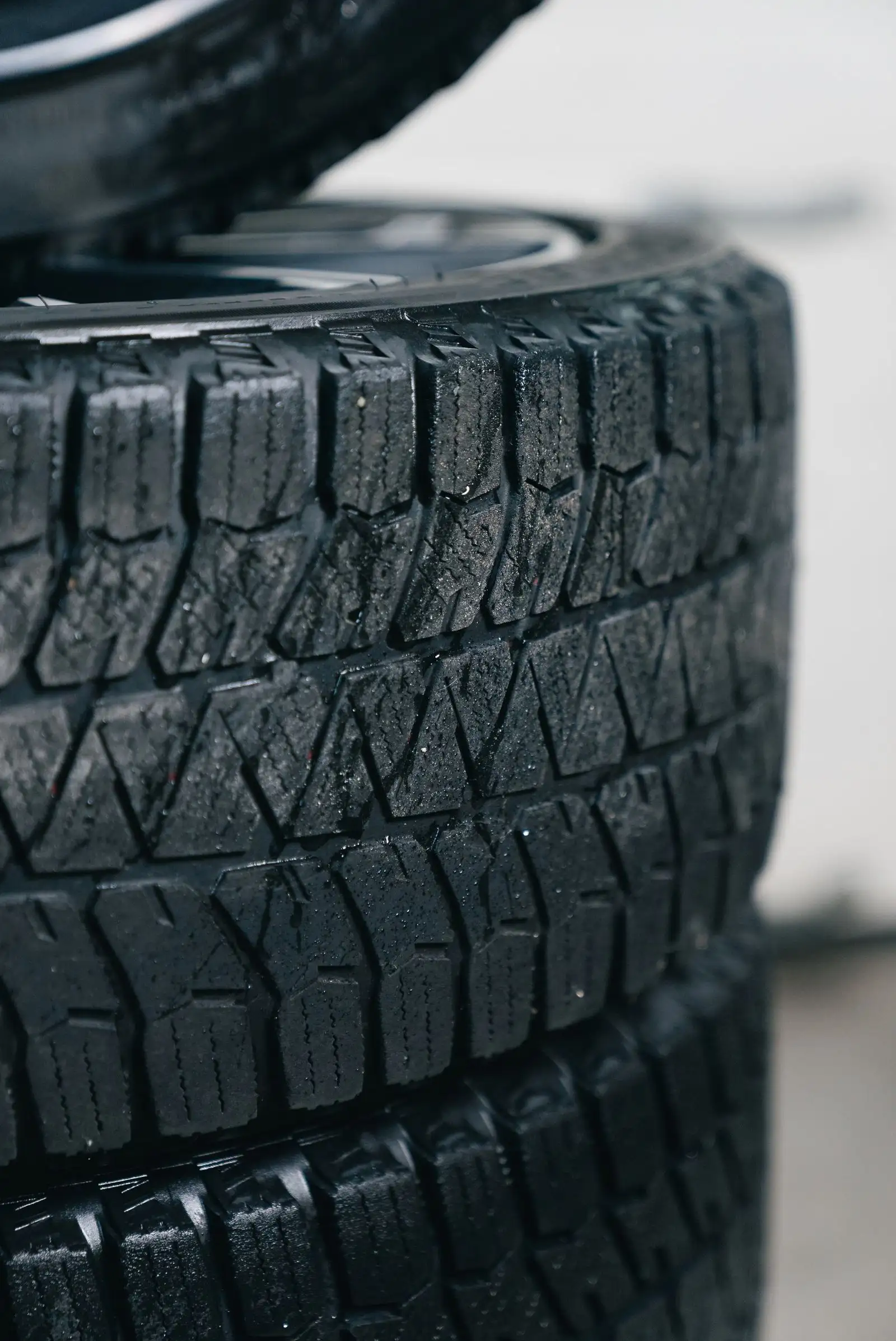
Modern tires have molded tread wear indicator bars built into the tread grooves at the 2/32 inch level. When the tread wears down to these bars, they become visible as flat bands running across the tread. If you can see these indicator bars in multiple grooves, the tire is legally worn out and must be replaced.
West Georgia Local
Find the right shop near you
Tell us your vehicle and what you need — we'll match you with a vetted West Georgia shop. Free, no obligation.
Sign 3: Tire age over 6 to 10 years
Tires age whether you drive them or not. UV, heat, ozone, and oxidation break the rubber down over time, and a tire with plenty of tread can still be unsafe at 8 to 10 years old. Most manufacturers and safety organizations recommend replacing tires after 6 to 10 years no matter how the tread looks.
Find the age in the DOT code on the sidewall. The last four digits are the week and year it was built, so 1824 means the 18th week of 2024. A tire stamped 1218, the 12th week of 2018, is already past six years old and closing in on replacement age.
Sign 4: Visible cracks or sidewall dry rot
Cracks in the tire sidewall or tread block area indicate rubber compound breakdown (dry rot). Shallow surface micro-cracking may be acceptable to monitor; deep or wide cracks, or cracks with visible cord below, mean the tire must be replaced immediately. In West Georgia summer heat and UV intensity, dry rot is a real risk on tires over 5 to 6 years old.
Sign 5: Bulge or bubble on the sidewall
A bulge or bubble on the tire sidewall means the inner liner has been damaged, usually by a pothole impact. Air is leaking into the outer sidewall layers. This is an immediate safety hazard. The tire can blow out with no warning, so replace it right away and do not run a bulged tire at highway speed.
Signs 6 and 7: Vibration and handling changes
Sign 6: Vibration in the steering wheel or cabin that balancing does not fix. This can indicate internal tire damage, tire delamination, or severe cupping from worn shock absorbers. A tire that vibrates despite being balanced should be inspected closely for internal damage.
Sign 7: the vehicle pulls to one side, braking feels longer, or wet-road handling has clearly slipped. Gradual traction loss is easy to miss, because you quietly adjust your driving to match it without noticing. Every so often, compare how the car stops and how it feels in the rain to when the tires were new.
Frequently asked
How do I know if I need new tires?
Check tread depth (penny test or quarter test), look for sidewall cracking or bulges, check the DOT date code for age, and pay attention to changes in handling or braking. Any tire showing tread wear indicators flush with the tread, visible sidewall bulges, or severe cracking must be replaced immediately.
How old is too old for a tire?
Most manufacturers and safety organizations recommend replacing tires after 6 to 10 years regardless of tread depth. Find the production date in the DOT code on the sidewall: the last four digits, where the last two are the year.
Can I wait to replace a tire that is getting low on tread?
At 4/32 inch, plan on replacing soon. At 2/32 inch, the legal limit, the tire has to go: wet traction is severely compromised. Running a 2/32 inch tire at 70 mph on rain-soaked West Georgia roads is a real accident risk.
Should I replace all four tires at once or just the worn ones?
It depends on your drivetrain and how much the others have left. On all-wheel drive, matched tread matters, so four at a time is usually the right move. On front- or rear-drive you can often replace in pairs on the same axle if the other two still have real life. A shop can measure all four and tell you honestly what you need.
Is it worth buying used tires when mine are worn out?
Usually not. Used tires rarely come with much tread left, you can't see internal damage from a past pothole or curb hit, and the rubber may already be aging out. You often end up back at the shop sooner than if you'd bought new. A fresh budget-tier set is typically the safer money and the better value over time.
Keep reading
Last updated 2026-07-24. General guidance only — confirm specifics with a local shop for your exact vehicle.