By the Rims & Tires Team
Compiled & reviewed by our West Georgia tire & wheel research team · Updated 2026-07-16
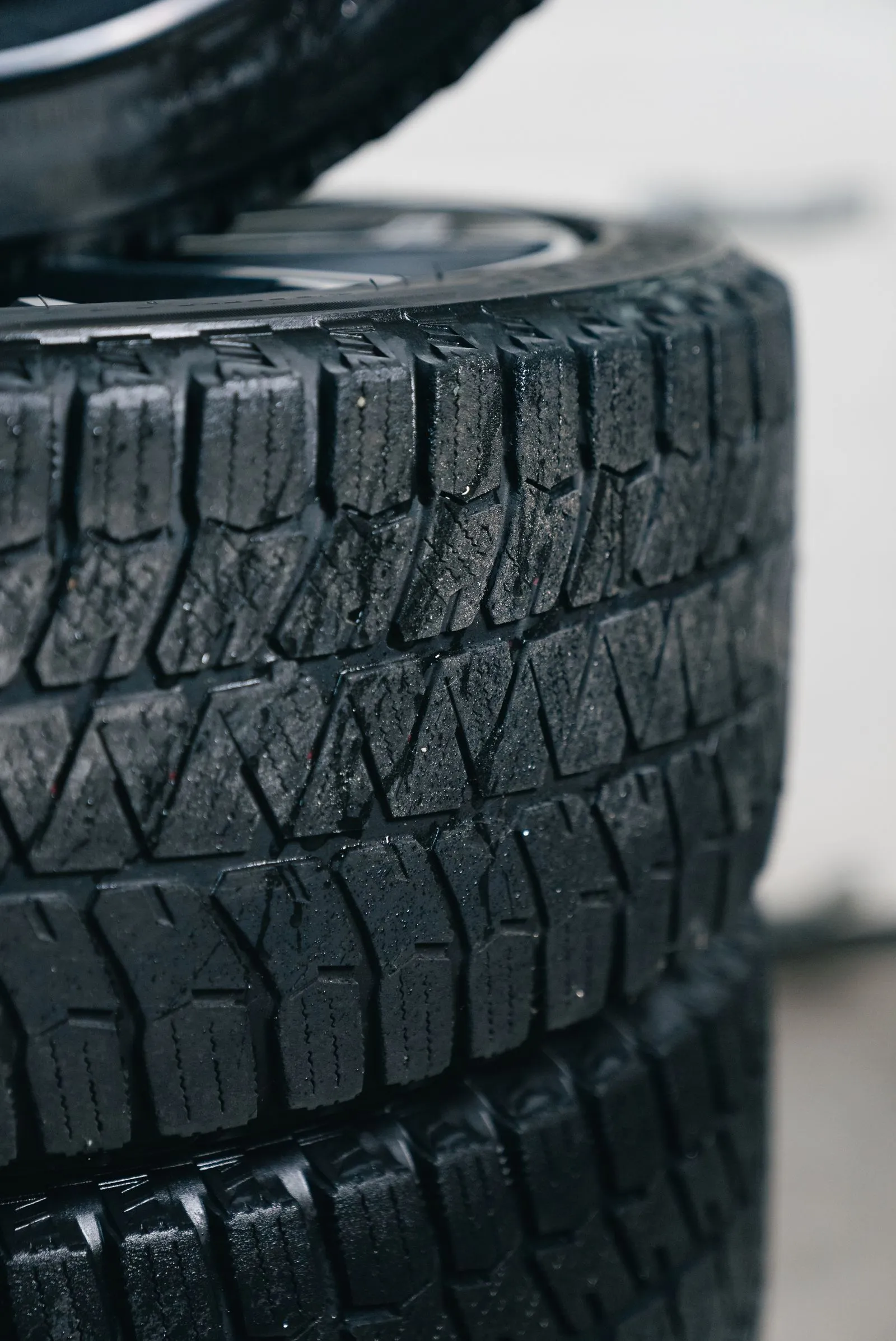
Tire feathering is a wear pattern where individual tread blocks develop a rounded edge on one side and a sharp, almost knife-like edge on the other — resembling a saw blade when viewed from the side. The most reliable way to detect it is by touch: run your palm firmly across the tread surface. One direction feels smooth; the other feels rough and abrasive. This is feathering.
What Causes Tire Feathering
Incorrect toe alignment is the primary cause. Toe describes the angle at which the tires point inward or outward when viewed from above. When toe is set incorrectly, even slightly, the tires scrub sideways against the road surface as the vehicle moves forward. That scrubbing shaves the edges of the tread blocks at an angle instead of wearing them evenly.
Toe-in (positive toe, tires point inward like pigeon toes) causes feathering on the outer edges of the tread blocks. Toe-out (negative toe, tires point outward) causes feathering on the inner edges.
Worn suspension bushings, ball joints, or steering components can cause toe to shift dynamically under load — this creates feathering that is inconsistent and harder to diagnose since static alignment checks may look correct.
Diagnosing Feathering
The hand test: run your palm firmly across the tread blocks from inside to outside of the tire, then repeat in the opposite direction. If one direction feels significantly smoother than the other, feathering is present. If you detect a clear directional texture difference, this confirms the wear pattern.
Visual inspection: look at the tire from the side with a flashlight. Feathered tread blocks will appear with one edge (leading or trailing) worn to a sharp slope while the opposite edge is more rounded. This is most visible in the outer or inner tread zones depending on the toe direction.
Sound: feathered tires often create a rhythmic whirring or hum at highway speeds — similar to but distinct from cupping noise. The sound occurs because the angled tread edges contact the road in a non-uniform pattern.
West Georgia Local
Find the right shop near you
Tell us your vehicle and what you need — we'll match you with a vetted West Georgia shop. Free, no obligation.
How to Fix Tire Feathering
A four-wheel alignment is the correct fix for feathering caused by toe misalignment. A professional alignment sets toe, camber, and caster to factory specifications. Most shops charge $75 to $125 for a four-wheel alignment — well worth it compared to the cost of a premature tire set.
If feathering is severe, the affected tires may be too worn for continued safe use after alignment. Have the tire shop inspect tread depth and wear uniformity after the alignment is complete.
If the feathering returns quickly after a fresh alignment, suspect worn suspension components. Ball joints, control arm bushings, and tie rod ends allow toe to shift under load when worn. Have a mechanic inspect these components — replace anything with play beyond specification.
Rotating tires regularly (every 5,000 to 7,500 miles) helps catch feathering early by exposing all tires to different wear positions before any single tire develops deep feathering.
Frequently asked
What does tire feathering feel like?
Run your palm across the tread from one side to the other. In one direction it feels smooth. In the opposite direction it feels rough or slightly abrasive, like stroking against the grain of wood or a cat's fur the wrong way. That directional roughness is feathering.
Does tire feathering go away after an alignment?
The alignment fixes the cause (toe misalignment), but the existing feathering in the rubber does not disappear. The tire will keep wearing from the feathered state going forward. The feathering pattern will stop worsening, though, and the remaining tread will wear more evenly. If the feathering has consumed significant tread, replacement may be necessary after alignment.
How is tire feathering different from cupping?
Feathering is a toe-driven wear pattern where tread block edges are beveled in one direction. Cupping (also called scalloping) is a vertical wear pattern creating high and low spots in the tread around the tire circumference, caused by worn shocks or struts, loose wheel bearings, or wheel imbalance. Both require diagnosis and repair, but the causes and fixes are different.
How do I prevent tire feathering?
Get a wheel alignment every 12 to 18 months or after any significant impact (pothole, curb strike). Rotate tires every 5,000 to 7,500 miles — rotation spreads wear and makes feathering easy to catch early. Replace worn steering and suspension components promptly, as worn bushings and ball joints allow toe to drift under load.
Keep reading
Last updated 2026-07-16. General guidance only — confirm specifics with a local shop for your exact vehicle.