Published by Rims & Tires
Compiled & checked by the site's publisher from manufacturer, NHTSA & USTMA data · Updated 2026-08-01
Most tires last 40,000 to 60,000 miles, or roughly three to five years of normal driving — but the real answer depends on the tire, how you drive, and how well you maintain them. Some long-wear touring tires are rated for 80,000 miles; aggressive performance and mud-terrain tires may be worn out by 30,000. Here’s how to tell where yours stand.
Do tires wear out by miles or by age?
Tread wears out with miles, but rubber also ages. Even a tire with plenty of tread can be unsafe if it’s old, because the rubber hardens and cracks over time. Most manufacturers suggest replacing tires at 6 years regardless of tread, and 10 years is a hard ceiling — check the four-digit DOT date stamp on the sidewall (week and year of manufacture).
So a daily driver usually wears out the tread first; a low-mileage weekend car or a spare may age out before it wears out.
What wears tires out faster?
Under-inflation, missed rotations, and bad alignment are the big three — all of them cause uneven wear that shortens tire life dramatically. Hard cornering and braking, hot pavement, heavy loads, and aggressive tread designs all add up too.
The cheapest way to make tires last longer: keep them at the correct pressure, rotate every 5,000–7,000 miles, and get an alignment when you notice pulling or uneven wear.
West Georgia Local
Find the right shop near you
Tell us your vehicle and what you need — we'll match you with a vetted West Georgia shop. Free, no obligation.
What if only one or two tires are worn out?
Replace all four when the budget allows. The U.S. Tire Manufacturers Association recommends replacing all four tires at the same time for optimal performance, and on an all-wheel-drive vehicle that’s closer to a requirement than a preference — mismatched rolling diameters make the center differential fight itself.
Only replacing two? USTMA says put them on the rear axle. That holds whether the car is front-, rear-, or all-wheel drive. Deeper tread on the back keeps the rear planted in the wet and prevents the oversteer you get when the back end loses grip first. Replacing a single tire, USTMA’s guidance is to pair the new one with whichever of the other three has the deepest tread and run both on the rear.
How do you tell if your tires are worn out?
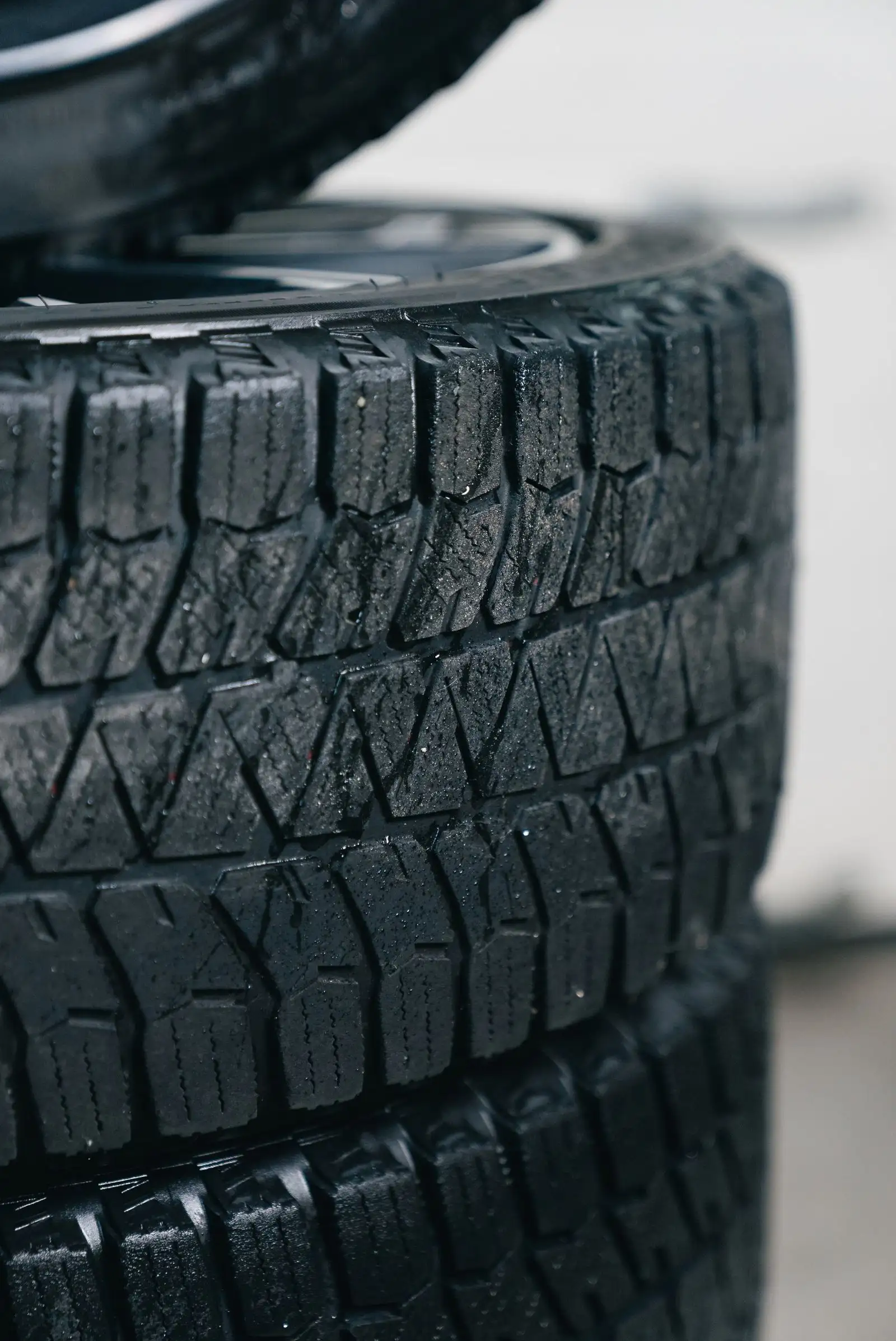
Three checks, none of which take a minute. Penny test: put a penny in the tread groove with Lincoln’s head upside down. If you can see the top of his head, you’re at or below 2/32" and it’s time to replace. The U.S. Tire Manufacturers Association draws the line in the same place, saying that once tread wears down to 2/32 of an inch it’s time to visit a tire shop. Many shops recommend replacing at 4/32" for wet-weather safety.
Also look for the wear bars (raised rubber across the grooves), uneven wear patterns, cracking in the sidewall, bulges, or vibration at speed. Any of those means it’s time to get them looked at.
Frequently asked
How many years do tires last?
Typically 3–5 years of normal driving, but rubber ages too — most makers recommend replacing at 6 years and never running a tire past 10 years, even if the tread looks fine.
Should I replace all four tires at once?
It’s ideal, especially on all-wheel-drive vehicles. If you only replace two, put the new pair on the rear axle and match the size and type as closely as possible.
How do I know when it’s time for new tires?
Watch for the wear bars sitting flush with the tread, a penny test that shows the top of Lincoln’s head, cracks or bulges in the sidewall, or a new vibration at speed. Any one of those is your cue to get them checked. Not sure? Most shops will look them over for free and tell you honestly how much life is left.
Is it worth buying used tires?
Sometimes — if you only need to match one that got damaged and the others still have plenty of tread. But used tires are a gamble on hidden age and internal damage you can’t see, so check the DOT date stamp and inspect the inner sidewall closely. For a full set, new mid-range tires usually cost less per mile once you factor in how long they last.
How do I read the date code on my tire?
Find the DOT code molded into the sidewall and look at the last four digits. The first two are the week, the last two are the year, so 3223 means the 32nd week of 2023. That’s the tire’s manufacture date, not its sale date — a “new” tire that sat in a warehouse for two years is already two years into its life.
Does the tire brand really change how long they last?
It does. Two tires the same size can be rated tens of thousands of miles apart depending on the rubber compound and tread design. A long-wear touring tire outlasts an aggressive performance or off-road tire by a wide margin, which is why matching the tire to how you actually drive matters more than chasing the lowest sticker price.
Keep reading
Last updated 2026-08-01. General guidance only — confirm specifics with a local shop for your exact vehicle.