Published by Rims & Tires
Compiled & checked by the site's publisher from manufacturer, NHTSA & USTMA data · Updated 2026-08-12
Wheel spacers do exactly one thing: they move the wheel outward from the hub. Everything people love and hate about them follows from that single change. A wider track looks better and adds a little stability, and it also lengthens the lever arm working on your wheel bearings and studs, changes your steering geometry slightly, and adds a maintenance task you have to remember. None of that makes spacers bad. It makes them a trade, and this guide lays out both sides of it honestly — including the case where the right answer is not a spacer at all. For the safety mechanics of choosing and installing them, see the companion guide on whether wheel spacers are safe.
The genuine reasons people fit spacers
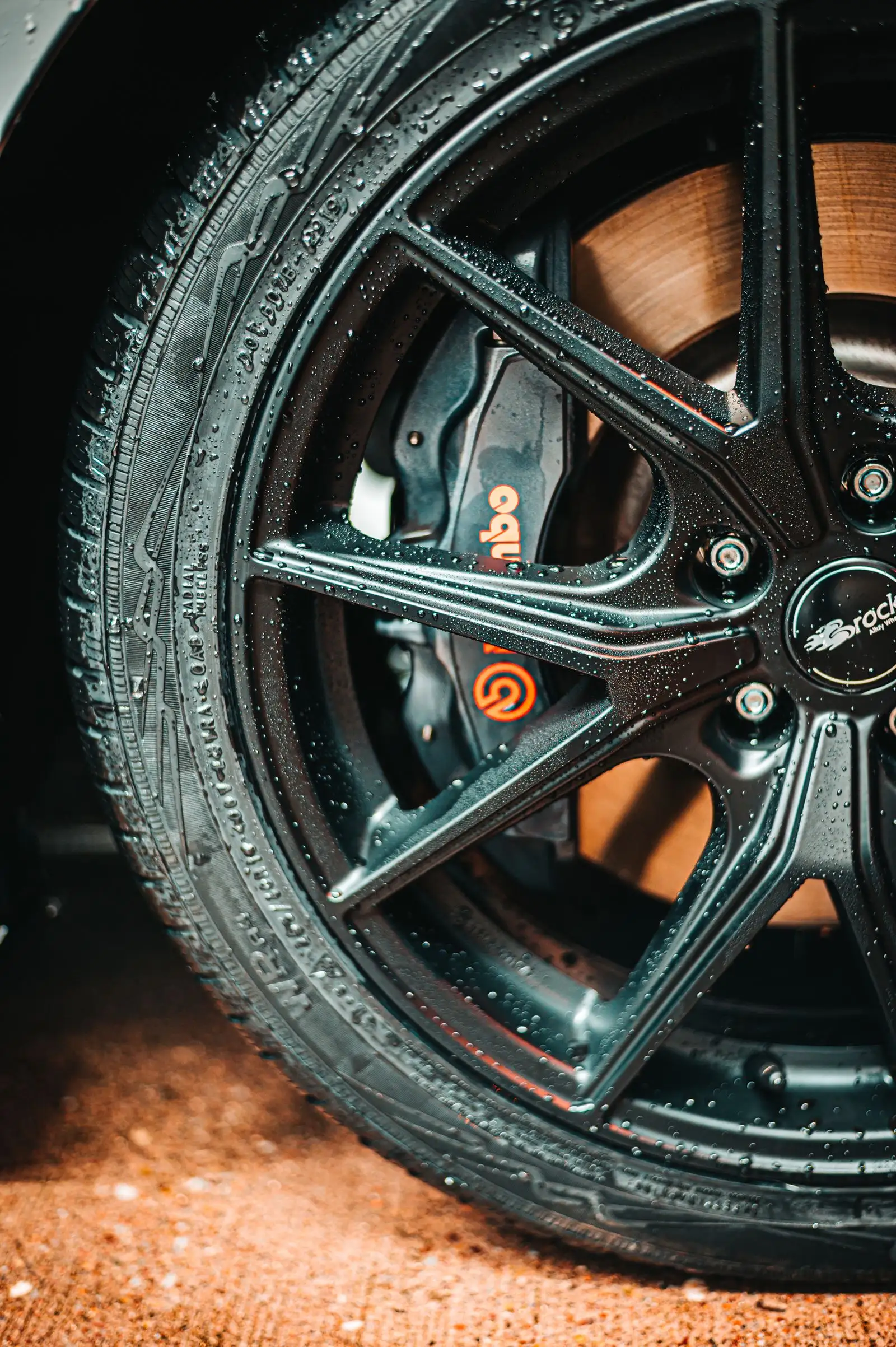
Brake clearance. If you have fitted larger calipers, or you want to run a wheel whose spokes sit close to the caliper, a thin spacer buys the few millimeters that make the combination work. This is the least controversial use there is, and it is common on cars with big-brake kits.
Correcting the offset of wheels you already own. If a set of wheels tucks too far in — a very common outcome when fitting wheels designed for a different vehicle — a spacer moves them out to where they should have been. Cheaper than selling the wheels and buying another set.
Suspension clearance on lifted and off-road trucks. A lift changes the geometry, and wider-than-stock tires need to clear control arms, tie rods, and the frame at full lock. Spacers are a standard part of that recipe.
Stance and track width. Wider track adds a small amount of lateral stability and, more honestly, most people fit spacers because a flush wheel looks dramatically better than one sunk inside the fender. That is a legitimate reason to spend money; it is just not an engineering one.
Running a wheel with a different bolt pattern. Spacer-adapters have one bolt pattern on the hub side and another on the wheel side, which is how a wheel from a different vehicle gets used at all. That is a different, thicker product than a simple spacer, with its own pressed-in studs.
The real downsides
Increased leverage on wheel bearings. Moving the wheel outward moves the tire's contact patch further from the bearing, which increases the bending moment the bearing sees. A 5 to 10 millimeter spacer is negligible in practice; a 30 millimeter spacer on a heavy vehicle is not. The effect scales with thickness, and this is the single most legitimate objection to spacers.
Increased stress on the studs. The same leverage applies to the wheel studs, and a spacer also reduces how much thread is left for the lug nuts unless you have chosen the thickness correctly. Thread engagement is the specific mechanism behind most spacer failure stories.
Changed scrub radius and steering feel. Pushing the wheel out increases scrub radius, which typically means slightly heavier steering, more tramlining on grooved pavement, and more feedback through the wheel over uneven surfaces. Some drivers like the added feel; some find it tiring.
A maintenance obligation. Spacers need re-torquing after the first 50 to 100 miles and again at every rotation, because the extra clamped joint settles under heat cycling. A wheel that comes loose on a spacer-equipped car is almost always a skipped re-torque, not a defective part.
Fender clearance and tire wear. Pushing the wheel out can bring the tire into contact with the fender lip under compression, and the wider track may put the outer edge of the tire under more load in cornering. Both are manageable; both need checking rather than assuming.
Resale and event rules. Some buyers are wary of spacers when it comes time to sell, and some track days and organized events set their own limits on them. Neither is a dealbreaker; both are worth knowing about before you fit them.
West Georgia Local
Find the right shop near you
Tell us your vehicle and what you need — we'll match you with a vetted West Georgia shop. Free, no obligation.
What they cost
Simple bolt-on spacers in common thicknesses run roughly $40 to $150 a pair depending on brand, alloy, and whether they are hub-centric. Forged 6061-T6 hub-centric spacers from name brands sit at the upper end of that, and published prices around $150 for a pair of 1.25-inch spacers are typical.
Hub-centric spacer-adapters with their own pressed studs are a different product at a different price — commonly $200 to $350 a pair, because they are thicker, machined more, and carry studs.
Installation is quick. Shop labor is generally under an hour for a set, so somewhere around $50 to $150 depending on the shop rate. Some shops decline the job outright, usually because they do not want liability on a part the customer supplied.
The honest comparison: a set of spacers plus install is roughly $150 to $400. A set of wheels in the correct offset is $400 to $2,000. That price gap is precisely why spacers are as popular as they are, and it is a reasonable reason to choose them — as long as you choose the right ones.
The better alternative, when you can afford it
If you are buying wheels anyway, buy the offset you actually want and skip the spacer entirely. A wheel with the correct offset puts the mounting face where you want it with no extra joint, no extra clamped interface, no re-torque schedule, and no thread-engagement question. It is the engineering answer, and every serious wheel shop will tell you the same thing.
Where that advice does not apply: you already own the wheels, the offset you want does not exist in the wheel you want, you need clearance for brakes rather than looks, or you are running a wheel from a different vehicle and need an adapter regardless. Those are all real situations, and spacers are the correct tool for them.
The middle path most people should take: keep spacers thin. Under about 20 millimeters, hub-centric, forged, with full thread engagement, the downsides are small enough that plenty of manufacturers fit similar spacers from the factory. It is the thick spacer on a heavy vehicle, or the cheap cast one, that generates the horror stories.
Deciding, and getting it done
Ask yourself what problem the spacer solves. Clearance is a problem; stance is a preference. Both are valid answers, but they lead to different amounts you should be willing to spend and different thicknesses you should be willing to run.
Then get the part right: forged rather than cast, hub-centric rather than lug-centric, a published load rating, and a thickness that keeps full thread engagement on your studs. The companion guide on wheel spacer safety covers the hub-centric versus lug-centric difference, the thread engagement rule, and the re-torque schedule in detail.
If you would rather have a shop confirm the thickness and fit them properly, several wheel and 4x4 shops in this directory across Carroll, Douglas, and Paulding counties do fitment work of exactly this kind. RimsAndTires is a free directory, not a shop — tell us what you are trying to achieve and we will match you with one.
Wheel spacers — pros and cons at a glance
| What you gain | What it costs you | |
|---|---|---|
| Brake caliper clearance | Lets a wheel fit that otherwise would not | Minimal at the thin sizes this needs |
| Correcting wheel offset | Saves buying another set of wheels | An extra clamped joint and a re-torque schedule |
| Wider track / stance | Flush look, slight lateral stability gain | More bearing and stud leverage, heavier steering feel |
| Off-road and lifted truck clearance | Wider tires clear suspension and frame | Fender contact risk, more strain on already-loaded parts |
| Running a different bolt pattern | Makes an otherwise impossible wheel usable | Requires a thicker spacer-adapter, $200–$350 a pair |
Frequently asked
What are the pros and cons of wheel spacers?
The pros are brake caliper clearance, correcting wheels that tuck too far in, clearing suspension on lifted trucks, and a wider, flusher stance. The cons are more leverage on wheel bearings and studs, increased scrub radius and heavier steering feel, a re-torque obligation, and possible fender contact. Thin, forged, hub-centric spacers keep the downsides small; thick or cheap ones do not.
Do wheel spacers ruin wheel bearings?
Not by themselves. They increase the bending moment on the bearing, and that effect scales with thickness — 5 to 10 millimeters is negligible on most vehicles, while 30 millimeters on something heavy is a genuine service-life question. Keeping spacers thin is the whole mitigation.
How much do wheel spacers cost installed?
Roughly $150 to $400 all in. Bolt-on spacers run about $40 to $150 a pair, forged hub-centric spacer-adapters with pressed studs are $200 to $350 a pair, and shop labor is generally under an hour for a set at $50 to $150. That compares to $400 to $2,000 for a set of wheels in the correct offset.
Is it better to buy wheels with the right offset than to use spacers?
Yes, if you are buying wheels anyway. The correct offset puts the mounting face where you want it with no extra joint and no maintenance schedule. Spacers remain the right tool when you already own the wheels, when the offset you want does not exist, when you need brake clearance, or when you are adapting a wheel from another vehicle.
Do wheel spacers affect handling?
Slightly. Wider track adds a small amount of lateral stability, and the increased scrub radius typically makes steering a little heavier and adds tramlining on grooved pavement. Most drivers notice the steering feel more than any handling gain.
What size wheel spacer should I get?
The smallest one that solves your problem. If you are clearing a caliper, measure the interference and add a small margin. If you are chasing a flush look, measure how far the wheel currently sits inside the fender rather than guessing. Thin spacers carry almost none of the downsides that thick ones do, so buying more than you need is buying trouble you did not need.
Do wheel spacers need to be re-torqued?
Yes, after the first 50 to 100 miles and again at every tire rotation. The added clamped joint settles under load and heat cycling. Skipping that re-torque is the most common cause of a spacer-equipped wheel coming loose, and it is entirely preventable.
Keep reading
Last updated 2026-08-12. General guidance only — confirm specifics with a local shop for your exact vehicle.