Published by Rims & Tires
Compiled & checked by the site's publisher from manufacturer, NHTSA & USTMA data · Updated 2026-07-16
The debate between dedicated winter tires and all-season tires comes down to one question: how cold and severe is your winter? Both categories have genuine strengths. Understanding how each tire is built explains which is the right choice for your situation, and why the answer changes depending on where you live.
How Winter Tires Work
Winter tires are built from a natural rubber compound that stays flexible in temperatures below 45 degrees Fahrenheit. Standard rubber compounds stiffen in the cold, reducing the tire grip on the road. Winter compound stays pliable, maintaining contact patch compliance at freezing temperatures.
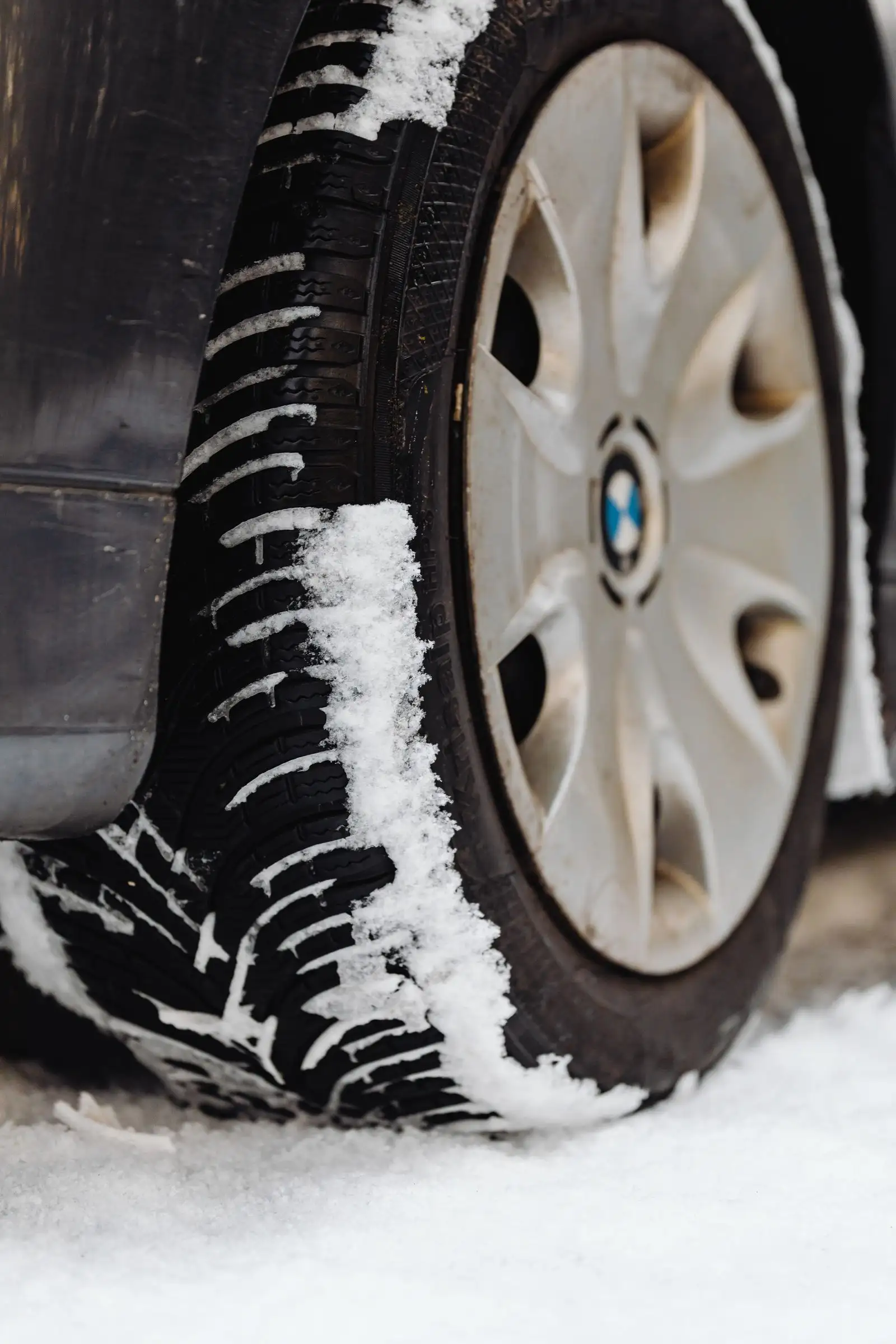
The tread design amplifies this advantage. Winter tires use sipes, thousands of micro-cuts across the tread blocks, that create biting edges on ice and packed snow. The open tread design evacuates loose snow to prevent packing in the grooves, which would reduce traction.
Winter tires carry a three-peak mountain snowflake (3PMSF) symbol on the sidewall, certifying they passed a standardized snow traction test. This symbol is a meaningful performance threshold, not just a marketing claim.
How All-Season Tires Work
All-season tires use a medium-durometer compound that stays workable over a wider temperature range than summer tires, typically from about 20 degrees Fahrenheit up to high summer heat. That range is a compromise: the compound isn't as soft as a dedicated winter tire below 45 degrees, and not as grippy as a summer tire above 60 degrees.
Many all-season tires carry an M+S (mud and snow) rating, which is a self-certified designation indicating the tire has some off-road and light snow capability. The M+S rating is a lower bar than the 3PMSF symbol. A tire can carry M+S without being genuinely capable in winter conditions.
Premium all-season tires like the Michelin CrossClimate 2 earn the 3PMSF rating while maintaining near-summer-tire performance in warm conditions, a genuine dual-capability achievement. These represent the best all-seasons available.
West Georgia Local
Find the right shop near you
Tell us your vehicle and what you need — we'll match you with a vetted West Georgia shop. Free, no obligation.
When You Need Dedicated Winter Tires
You need dedicated winter tires when temperatures regularly drop below 40 degrees Fahrenheit, you regularly encounter ice or packed snow, or you live in a region with defined winter seasons featuring frequent snowfall.
On ice specifically, the gap between winter and all-season tires is dramatic. Independent testing (Tire Rack, the Tire and Rubber Association of Canada) puts stopping distances on ice and packed snow at roughly 30-40 percent shorter on dedicated winter tires compared to all-seasons. No all-season tire closes this gap, even premium 3PMSF-rated ones.
The math often works in your favor: a set of winter tires on a spare set of steel wheels pauses wear on your primary all-season or summer tires. You essentially split the annual mileage between two sets, which can make the winter tires cost-neutral or cheaper over several years.
When All-Season Tires Are Enough
For West Georgia and much of the southeastern United States, a quality all-season tire is adequate for most drivers. This region rarely sees temperatures below 20 degrees Fahrenheit, ice events are brief and infrequent, and snow accumulation of more than a few inches is unusual.
In this climate, the CrossClimate 2, Goodyear Assurance WeatherReady 2, or similar premium 3PMSF all-season tires provide genuine winter capability for the rare cold event while delivering excellent everyday performance the rest of the year.
If you travel north in winter or work in a job that requires driving in any conditions, the calculus changes. Consider at minimum having a set of winter tires available for those trips or seasons.
Winter tires vs. all-season tires at a glance
| Factor | Winter Tires | All-Season Tires |
|---|---|---|
| Certification | 3PMSF (tested snow-braking standard) | Often M+S only (self-certified) |
| Effective temp range | Best below ~45°F | Roughly 20°F to summer heat |
| Stopping distance on ice | Up to 50% shorter than all-season | Baseline |
| Best for | Regular ice/snow, temps consistently under 40°F | West Georgia's mild, brief winters |
Frequently asked
Are winter tires worth it in Georgia?
For most West Georgia drivers, a premium all-season tire like the Michelin CrossClimate 2 or Goodyear Assurance WeatherReady 2 is adequate. Georgia winters are typically mild with brief cold snaps. However, if you travel to the mountains of North Georgia or frequently drive north in winter, dedicated winter tires on a spare set of wheels are worth the investment.
Can I use winter tires year-round?
No. Winter tire rubber compounds are soft by design. They wear rapidly in warm temperatures and compromise handling and fuel economy in summer. Winter tires should only be used when temperatures are consistently below 45 degrees Fahrenheit. Running them in summer dramatically shortens their life.
What is the difference between M+S and 3PMSF ratings?
M+S (mud and snow) is a self-certified designation that requires only a basic tread pattern. The three-peak mountain snowflake (3PMSF) symbol requires the tire to pass a standardized snow traction test: at least 110 percent of a reference tire in measured conditions. The 3PMSF symbol is the meaningful winter capability indicator; M+S alone is not sufficient for serious winter use.
Do I need to buy a separate set of wheels for winter tires?
Not required, but highly recommended. Mounting and dismounting tires seasonally increases wear and cost over time. A second set of steel or base alloy wheels (available cheaply for most vehicles) makes seasonal swaps fast, eliminates per-swap mounting costs, and protects your primary wheels from road salt and winter grime.
Keep reading
Last updated 2026-07-16. General guidance only — confirm specifics with a local shop for your exact vehicle.