Published by Rims & Tires
Compiled & checked by the site's publisher from manufacturer, NHTSA & USTMA data · Updated 2026-07-24
Aftermarket wheels are one of the most impactful visual upgrades you can make to a vehicle. But the wrong choice (wrong offset, wrong center bore, wrong load rating) can cause rubbing against the fender or brake caliper, vibration, or in severe cases a safety issue. This guide walks through every measurement that determines whether a wheel fits your vehicle correctly before you spend money.
Step 1: Know Your Stock Fitment
Before shopping, document your OEM wheel specs from your door jamb sticker or owner's manual: tire size (e.g. 265/70R17), wheel diameter and width (e.g. 17x7.5), bolt pattern (e.g. 6x139.7), offset (e.g. ET30 or +30mm), and center bore (e.g. 78.1mm).
These numbers define the envelope your new wheel must fit within. You can go larger in diameter (plus-sizing) or wider, but each change has consequences: wider wheels need more fender clearance, and larger diameter needs lower-profile tires to maintain the same rolling circumference.
Step 2: Bolt Pattern (Critical, No Exceptions)
Your aftermarket wheel's bolt pattern must match your vehicle's exactly. 5x114.3 cannot use a 5x120 wheel without adapters. This is a binary fit-or-doesn't-fit spec. There is no approximation.
If you want a wheel made for a different bolt pattern, wheel adapters can bridge the gap, but they add complexity and potential for vibration if low quality.
West Georgia Local
Find the right shop near you
Tell us your vehicle and what you need — we'll match you with a vetted West Georgia shop. Free, no obligation.
Step 3: Offset and Backspacing
Offset is the distance (in mm) between the wheel's mounting face and its center line. Positive offset (+) pushes the wheel inward toward the vehicle; negative offset (-) pushes it outward. Zero offset places the mounting face at the exact center.
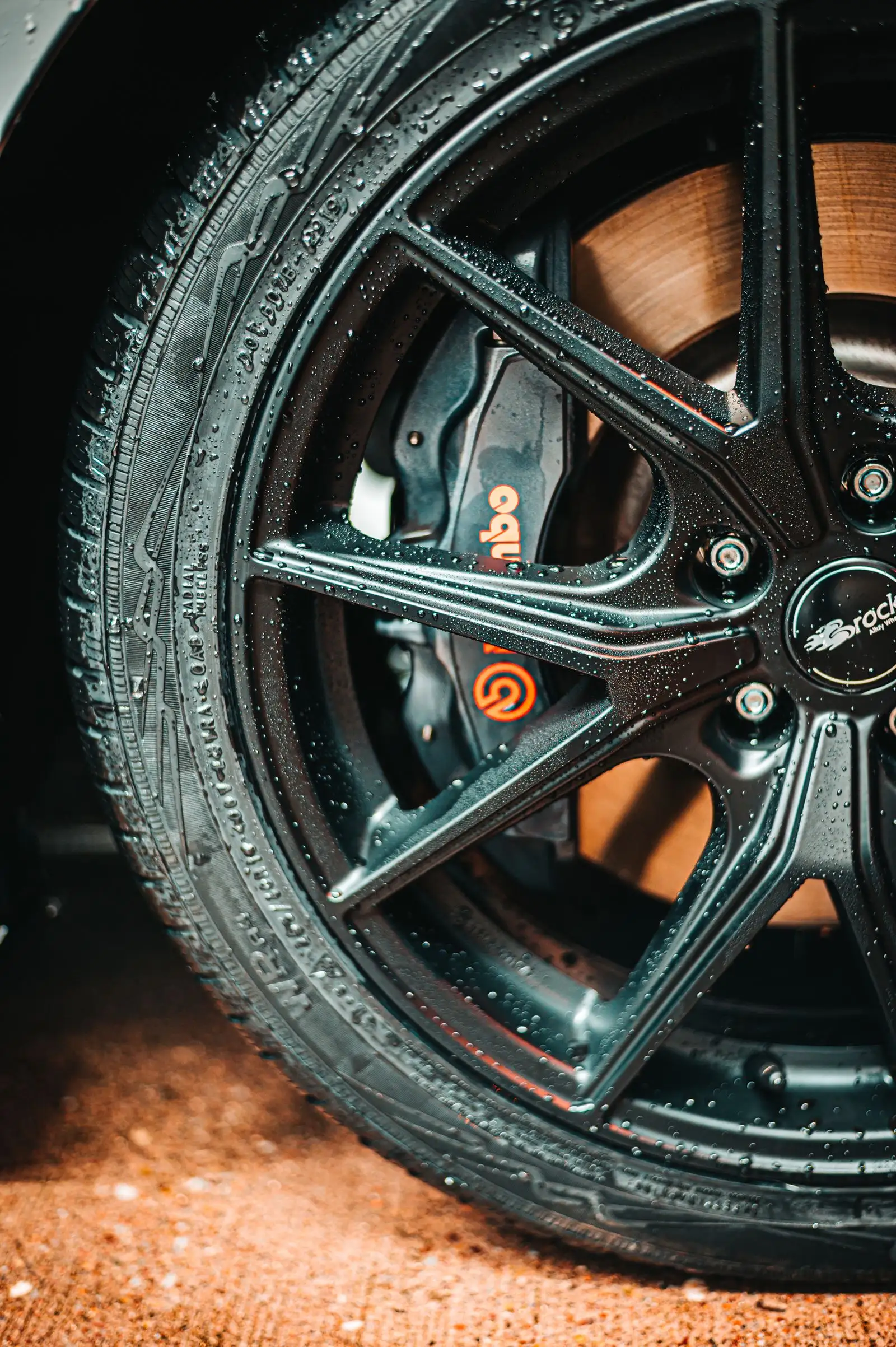
Going too negative: the wheel sticks out past the fender, rubbing on wheel-well edges or fenders under compression and turning. Going too positive: the wheel moves inward, risking contact with brake calipers or suspension components.
For trucks, a common move is reducing offset (going more negative) to push the wheel outward for a wider stance. That usually requires fender flares or a lift to avoid rubbing.
Backspacing is an alternative measurement for the same concept used more commonly for truck fitments: the distance from the mounting face to the rear edge of the wheel. Higher backspacing = wheel moves inward.
Step 4: Center Bore
Center bore is the diameter of the hole in the center of the wheel. It must be equal to or larger than your hub's diameter.
If the center bore is exactly right (hub-centric fit), the hub centers the wheel precisely. If it is larger (lug-centric), you need hub-centric rings to fill the gap and prevent vibration.
Common hub diameters: Ford F-Series trucks 70.5 to 78.1mm; Chevy/GMC trucks 78.1mm; Toyota trucks 106.1mm; most BMW/Audi/Mercedes 57.1 to 74.1mm. Aftermarket wheels often use 73.1 or 78.1 to cover multiple vehicles.
Step 5: Load Rating
Every wheel has a load rating: the maximum weight it can safely carry. Wheel load ratings are listed in the wheel specifications and must equal or exceed the corner weight of your vehicle (vehicle weight divided by 4, plus payload).
Lightweight alloy wheels designed for sports cars are often under-rated for truck use. When shopping for truck wheels, verify the load rating supports the truck's GVWR.
Frequently asked
What is the most common mistake when buying aftermarket wheels?
Wrong offset. Buyers often focus on diameter and style, then discover the offset is wrong and the wheel rubs on the fender or caliper. Always verify offset before purchasing.
Can I put a larger wheel on my truck without a lift?
Depends on how much larger. Going up 1-2 inches in diameter is often doable with proper offset selection. Going up 3+ inches without a lift typically requires trimming or spacers to clear the wheel well. A leveling kit (front strut spacer) is often sufficient for modest upsizing on trucks.
Do I need hub-centric rings with aftermarket wheels?
If the aftermarket wheel's center bore is larger than your hub diameter, yes. Hub-centric rings fill the gap and prevent vibration at highway speeds. They're cheap insurance. Many aftermarket wheels come with rings included; if not, buy them separately.
Will bigger aftermarket wheels hurt my ride quality?
Usually a little, yes. Going up in wheel diameter means a shorter tire sidewall, and less sidewall means less cushion over potholes and rough pavement, which West Georgia's county roads have plenty of. You gain a sportier look and sharper steering feel, but the trade is a firmer, sometimes noisier ride. Modest upsizing keeps the balance; going too far chases looks at the cost of comfort.
Where can I get help fitting aftermarket wheels near me in West Georgia?
A local wheel-and-tire shop is worth the visit before you buy. They can confirm your bolt pattern, offset, and center bore, flag any rubbing or caliper-clearance issues for your specific vehicle, and mount and balance the new setup correctly. Getting the fitment checked by someone who does it daily is far cheaper than ordering the wrong wheels online. We can match you with a nearby shop.
Keep reading
Last updated 2026-07-24. General guidance only — confirm specifics with a local shop for your exact vehicle.