Published by Rims & Tires
Compiled & checked by the site's publisher from manufacturer, NHTSA & USTMA data · Updated 2026-07-24
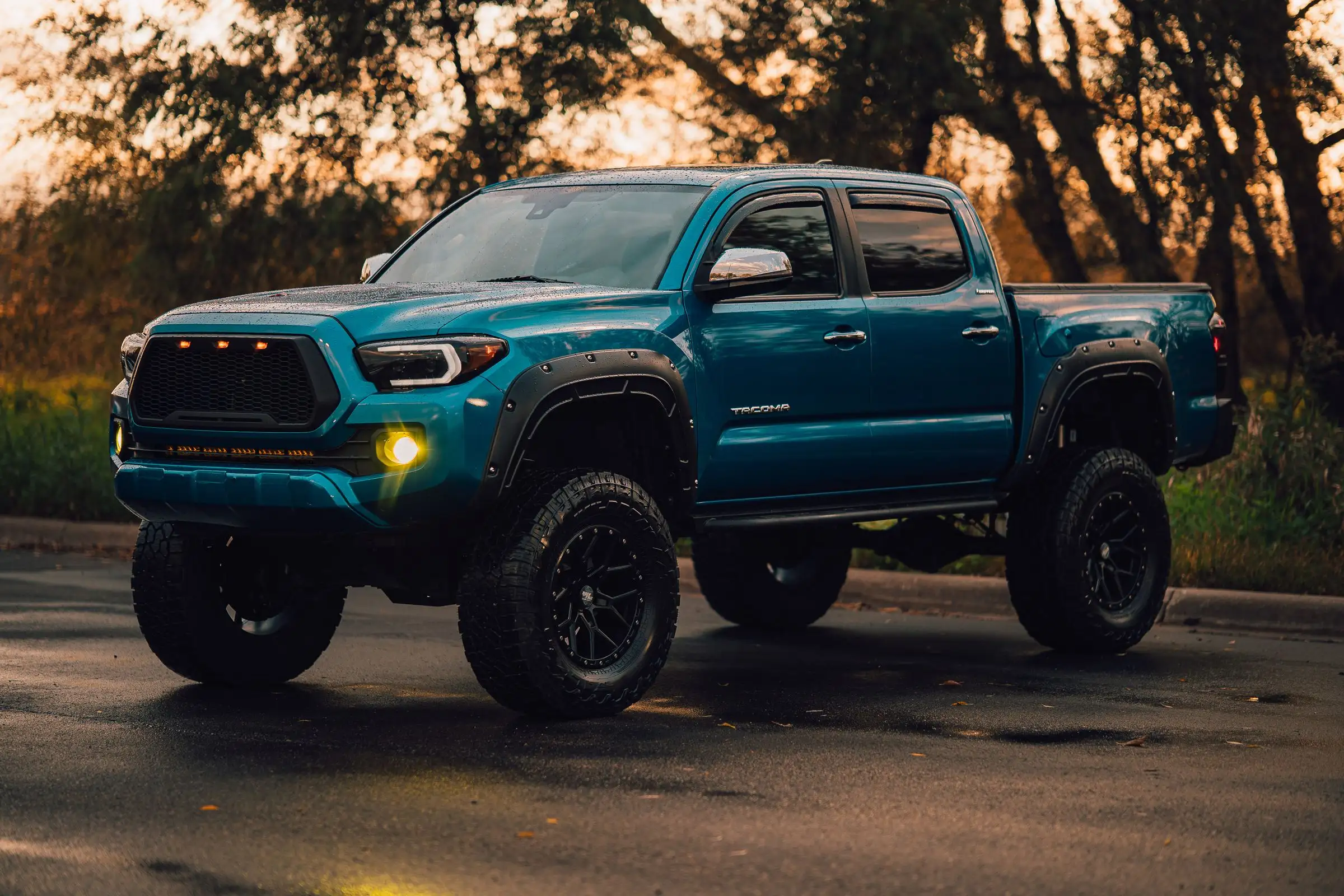
Lifted trucks have different wheel fitment requirements than stock-height trucks. A 4-inch lift changes how much wheel offset you can run, what diameter tires clear the wheel well, and where the axle sits relative to the fender. Choosing wheels for a lifted truck without accounting for the lift can result in rubbing, poor appearance, or clearance issues even on a truck with a professional lift kit.
How a Lift Changes Your Wheel Fitment
A suspension lift raises the body and frame away from the axle — it creates more space in the wheel well for taller and wider tires. A leveling kit raises only the front, correcting the factory rake.
A body lift (less common) raises only the body, not the suspension — it does not change the relationship between tire and fender well the same way.
With a suspension lift, negative offset (pushing the wheel out) is often desirable for a wider stance and to ensure the larger tires clear the fender and suspension components at full lock.
Common lifted truck offset: a stock F-150 might run +44mm offset. With a 3-4 inch lift and 35-inch tires, many owners drop to 0 to -12mm for the right stance and clearance.
Wheel Diameter — 17, 18, or 20 Inch?
17-inch wheels with 35-inch or larger tires: the most popular combination for lifted trucks that see actual off-road use. The taller sidewall absorbs rock impacts better and provides more air volume for airing down off-road. Tires are less expensive in 17-inch than 20-inch.
18-inch wheels with 33-35 inch tires: a versatile middle ground — available in many off-road tire options, more aggressive appearance than 17, and still practical for off-road use.
20-inch wheels with 33-35 inch tires: the premium street-truck look. Lower sidewall means less cushioning off-road and more expensive tires. Common on show trucks, daily drivers, and trucks that rarely leave pavement.
For trucks that do real off-road work (mud, rock crawling), 17-inch is the pragmatic choice. For trucks that are primarily street-driven with occasional light off-road, 20-inch provides the premium appearance most buyers are after.
West Georgia Local
Find the right shop near you
Tell us your vehicle and what you need — we'll match you with a vetted West Georgia shop. Free, no obligation.
Top Aftermarket Wheel Brands for Lifted Trucks
Method Race Wheels: well-regarded for off-road and overland builds. Strong construction, many bead-lock-capable options, clean appearance. Popular with Tacoma, 4Runner, and Wrangler builds.
XD Series by KMC: one of the most popular aftermarket truck wheel brands in the US. Wide selection from budget-friendly to premium. Aggressive styling that sells well in the South and Southeast.
Fuel Wheels: aggressive styling dominant in lifted truck builds. Known for large lip designs, deep offset options, and truck-focused engineering. Popular in Carroll, Douglas, and Paulding County truck builds.
American Force (forged): premium forged monoblock wheels for show trucks. Extremely strong, made in USA, but premium-priced. Common on lifted HD trucks.
Weld Racing: track and street performance. Common on muscle cars and performance trucks. Different aesthetic from the Fuel/XD style.
Frequently asked
What offset do I need for a lifted truck?
Depends on the lift height, tire width, and desired stance. Most 3-4 inch lifted half-ton trucks run -12mm to +18mm offset with a 35-inch tire. Zero offset (ET0) is a common safe starting point that avoids rubbing on most half-ton truck platforms with a mild lift.
Do I need new wheels when I install a lift kit?
Not necessarily — your stock wheels may work fine with the lift, especially if you are not changing tire size significantly. Most people pair a lift with new wheels because they want the visual transformation to be complete.
What is a good tire and wheel combo for a lifted Silverado or F-150?
17x9 or 18x9 wheel at 0 to -12mm offset with a 285/70R17 or 285/75R17 (33-34 inch) tire is a popular street-capable, light off-road setup for a 3-4 inch lifted half-ton. For a 35-inch tire, bump up to 17x10 or 18x10 wheel.
Do bigger wheels hurt ride quality on a lifted truck?
They can. A larger-diameter wheel means less tire sidewall to soak up bumps, so the ride gets firmer and pothole damage is more likely. A lot of owners find a slightly smaller wheel with a taller tire rides better off-road and looks just as good. It's worth talking through with a shop before you commit.
Will new wheels and tires throw off my speedometer?
Only if you change the overall tire height. Taller tires make the speedometer read slower than you're actually going, which also affects your odometer. A shop can recalibrate most modern trucks to match the new tire size so your readings stay honest.
Keep reading
Last updated 2026-07-24. General guidance only — confirm specifics with a local shop for your exact vehicle.